Contents
Demo Link
Picture this: You’ve just spent thousands of dollars and countless hours launching a digital PR campaign. You secure a handful of placements on decent industry blogs. Now, you wait. You refresh your analytics dashboard daily, hoping those links move the needle on your organic traffic.
For decades, this has been the reality of SEO. Link building has largely been a game of educated guesswork. We knew links were valuable, but predicting exactly how much value a single link would bring to a specific keyword ranking was nearly impossible.
Welcome to 2026. The era of crossing your fingers and hoping for the best is officially behind us.
Enter Predictive Link Impact—a specialized application of artificial intelligence that allows you to forecast the exact return on investment (ROI) of a backlink before you even build it. By analyzing massive datasets of historical search engine result page (SERP) movements, competitor link patterns, and real-time industry trends, AI has transformed link building from an art into a precise, predictable science.
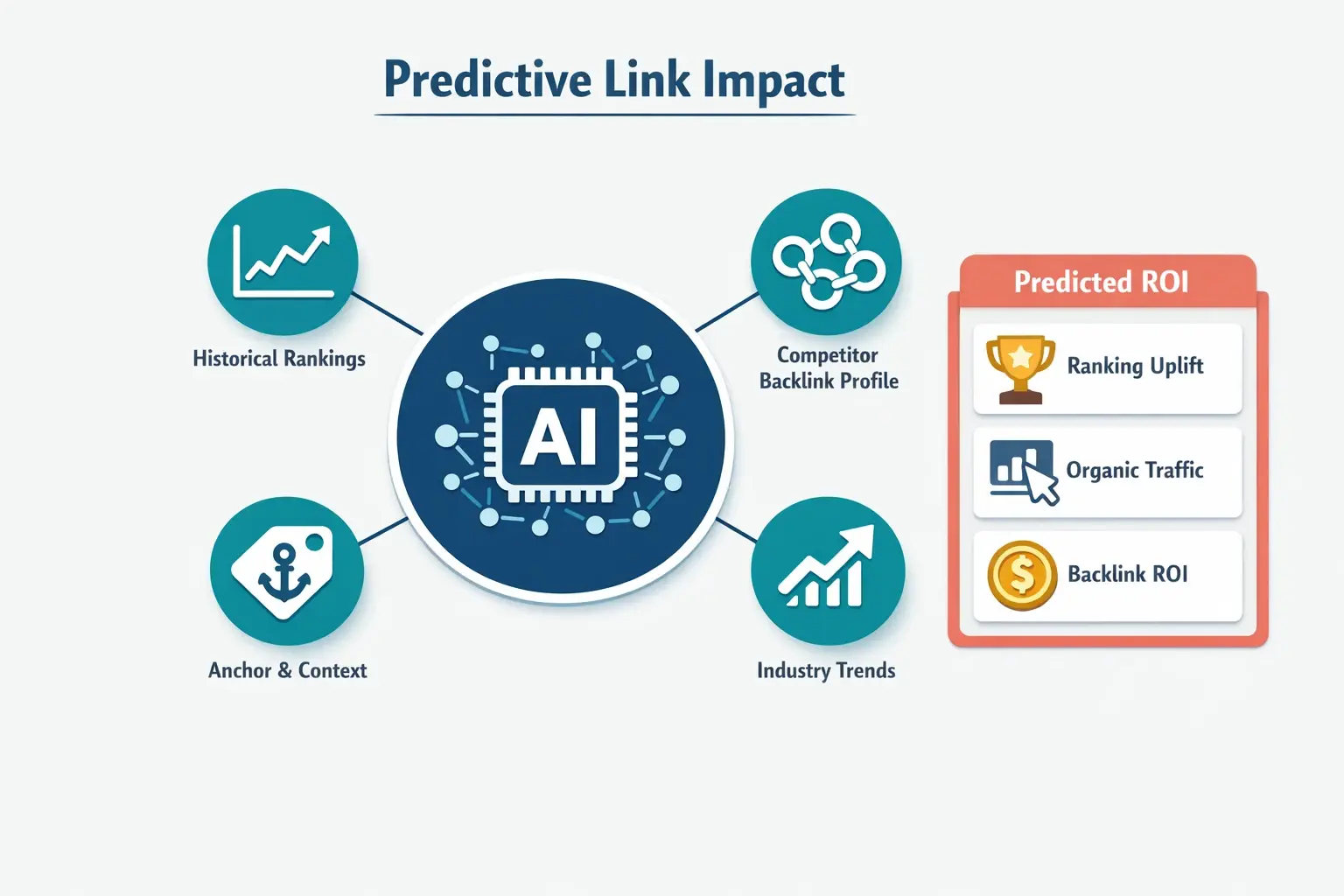
In simple terms, Predictive Link Impact is the ability to use AI machine learning models to answer a critical question: "If I get a link from Website A to my page about Topic B, what will happen to my organic traffic and keyword rankings?"
Historically, SEOs evaluated potential links using static, backward-looking metrics. If you’ve ever researched how is domain authority calculated, you know that traditional scores simply tell you how authoritative a site has been in the past. They don't tell you how a link from that site will perform for your unique webpage today.
Predictive AI changes this. It uses pattern recognition to analyze the current search landscape, feeding on vast amounts of data to simulate the future impact of a new link.
To make accurate forecasts, predictive AI models evaluate hundreds of variables simultaneously:
So, how exactly does AI turn raw data into a reliable ROI forecast? It’s all about advanced machine learning.
When you conduct a modern link building analysis, AI models (like regression models and graph neural networks) run complex simulations. The AI looks at instances where websites acquired similar links and maps out the subsequent changes in their organic search visibility. It learns that a link from a niche-specific, high-traffic blog with perfectly optimized anchor text historically yields an average ranking jump of 3.4 positions within 28 days for a specific difficulty level.
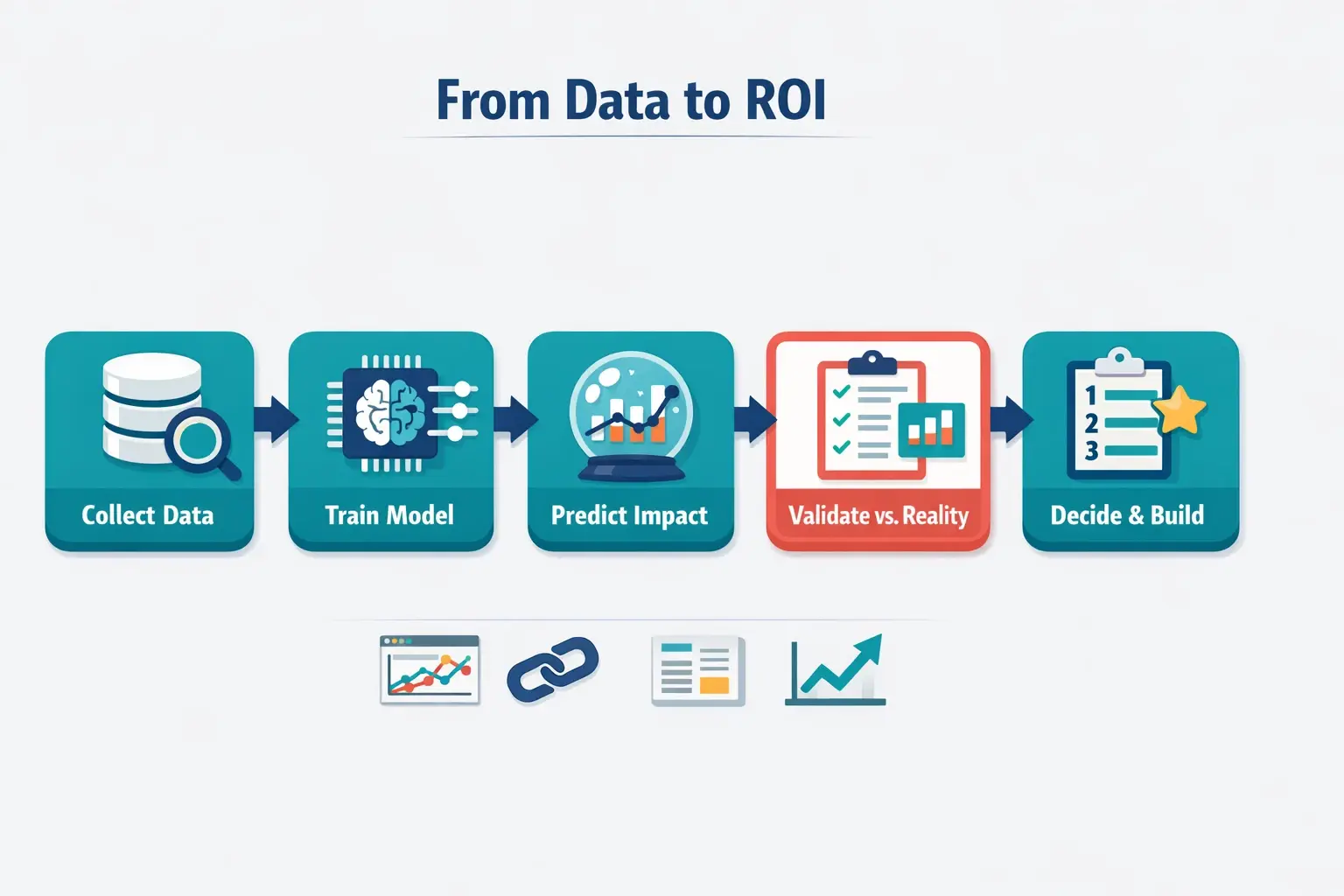
If you were to peek under the hood of a predictive link impact tool, here is the conceptual workflow taking place before you send a single outreach email:
As search engines have integrated more generative AI into their interfaces—transforming how users get answers directly on the SERP—the nature of a "valuable link" has evolved. Today, we must distinguish between traditional link equity and the rising importance of "AI Citations."
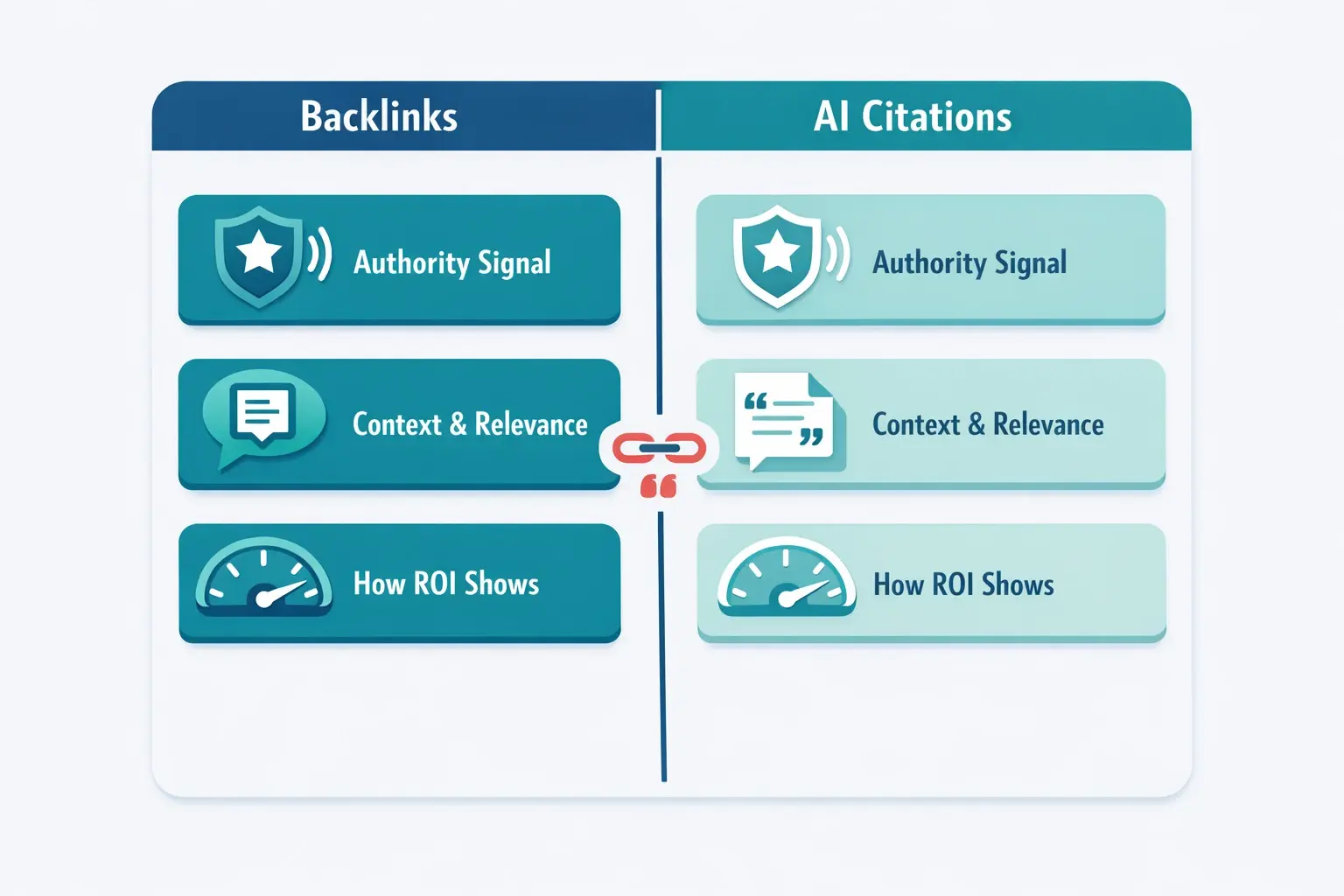
Traditional backlinks are the pathways of authority that pass "link juice" from one site to another, helping pages rank in the standard organic blue links.
AI Citations, on the other hand, are references used by AI Overviews and chatbots to compile their conversational answers. This is a crucial element of generative engine optimization. Often, an AI might pull a highly relevant brand mention from a reputable source, even if it lacks a followed hyperlink. In the AI era, strategic brand mentions for seo can generate significant visibility and compound your brand authority, feeding directly into your overall predictive ROI.
The magic of Predictive Link Impact is that advanced models can now forecast the value of both. They can predict how a traditional link will push you up the classic search rankings, and they can estimate the likelihood of a high-authority mention getting your brand cited in an AI Overview.
You don’t need to be a data scientist to benefit from this technology. The most immediate way businesses are leveraging this is through an AI Link Scorecard approach.
Instead of looking at a massive spreadsheet of potential websites and guessing which ones are best based purely on static numbers, you let AI translate those factors into dynamic, forward-looking link metrics.
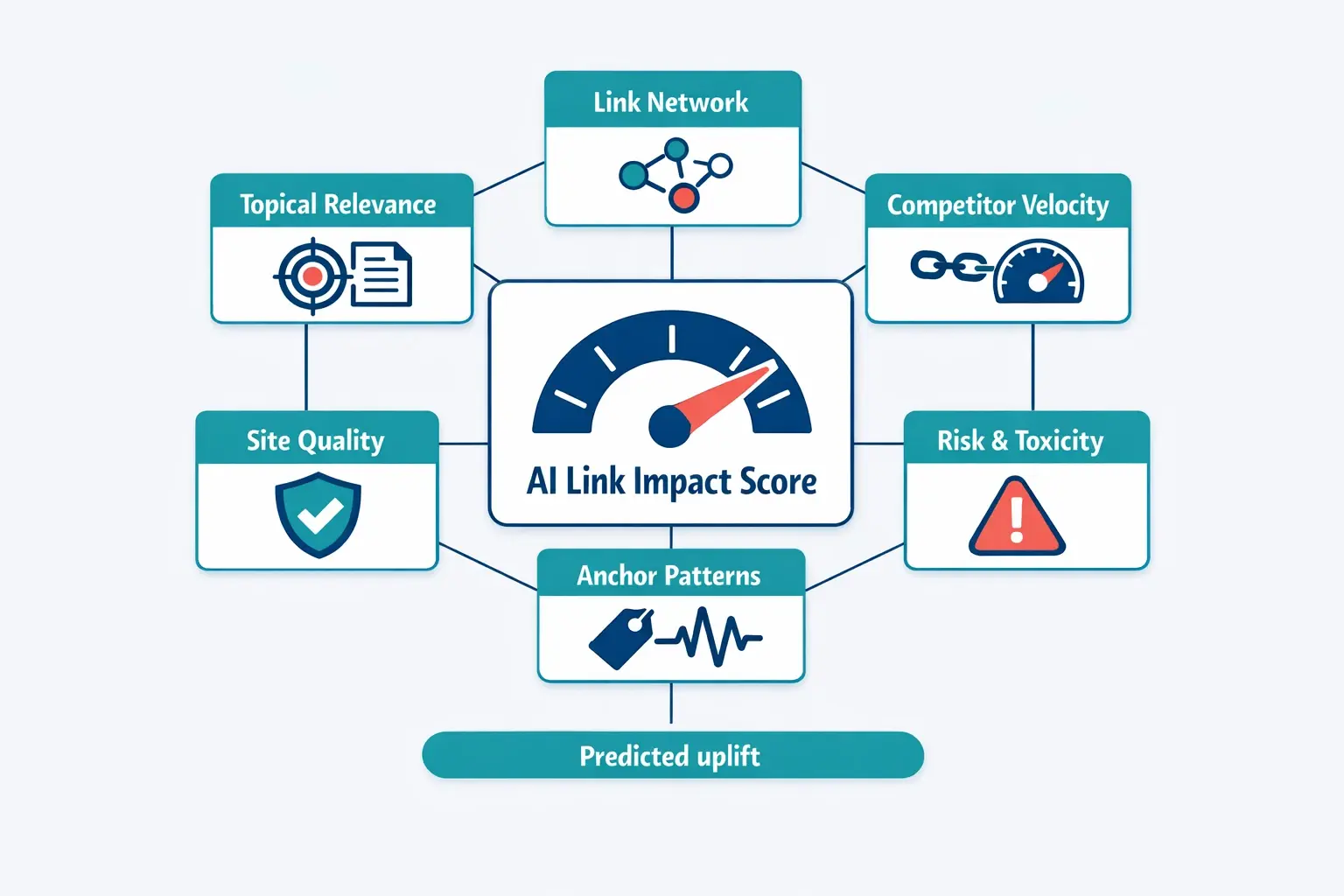
Whether you are targeting high-tier digital PR placements or focusing on laser-targeted contextual backlinks, using a predictive framework allows you to prioritize outreach intelligently. If Site A has a predicted traffic uplift of +100 visits/month, and Site B has a predicted uplift of +800 visits/month, your strategy instantly writes itself.
While forecasting is incredibly powerful, it’s vital to remember that AI is a tool, not an autopilot system. Algorithmic bias, data quality issues, and the nuances of human relationships in digital PR mean that over-relying on bots is a dangerous game.
Even if you are utilizing a highly advanced automated link building service to scale your outreach, human oversight remains non-negotiable. An AI might predict a massive ROI from a specific site, but it takes a human SEO expert to recognize if that site uses manipulative practices that could result in a penalty down the line. The winning formula is AI-driven insights executed with human-driven strategy and quality assurance.
Predictive AI refers to machine learning algorithms that analyze historical data, recognize complex patterns, and use that information to forecast future outcomes. In SEO, it’s used to predict things like algorithm changes, content performance, and the ROI of link building efforts before they occur.
Not at all. While the search landscape is shifting, backlinks remain one of the most powerful foundational trust signals for search engines. However, the type of links that matter has evolved. AI is simply making us smarter about which links we pursue, ensuring we prioritize quality and relevance over sheer volume.
A traditional backlink is a clickable hyperlink pointing from one website to another, passing link equity and authority. An AI citation is when an AI-powered search feature (like Google's AI Overviews) mentions or references your brand or content as a source in its conversational answer. Both drive visibility, but they operate through different mechanisms.
No predictive model is 100% perfect, as search algorithms are dynamic and constantly updating. However, predictive link impact provides highly probable estimates based on massive datasets, transforming link building from a total guessing game into a data-backed, calculated investment.
Yes. Modern AI models are incredibly adept at analyzing network effects and identifying link neighborhoods that display spammy or manipulative patterns. This allows predictive tools to warn you away from links that might look good on paper but carry a high risk of algorithmic penalty.
The days of the "spray and pray" approach to link building are over. In 2026, allocating budget without understanding the projected outcome is no longer a viable strategy for businesses looking to scale their organic growth.
By embracing Predictive Link Impact, you empower your brand to make strategic, data-driven decisions. You stop guessing which links will move the needle, and start building the exact digital authority required to capture your market.
Understanding the theory is the first step. The next? Implementing a framework that uses AI to audit your current profile, forecast your biggest growth opportunities, and execute a quality-first strategy that turns predictions into reality.