Contents
Demo Link
People don’t just search online; they’re looking for something nearby, right now. In fact, almost half of all Google searches have local intent, and 76% of smartphone users who search for a local business visit it the same day. That’s a lot of ready-to-convert traffic sitting just a search away.
But being “findable” takes more than luck. Google decides who shows up in the Local Pack and local search results using a mix of signals, and backlinks are among the clearest ways to demonstrate your business is trusted and relevant in your area. Citations and reviews help, proximity matters, but nothing signals local authority like links from the right sources in your community.
This post cuts through the noise to show you exactly which backlinks matter most for local SEO and how to earn them with ease, without wasting time on low‑impact tactics.
Building strong local backlinks doesn’t have to be complicated. If you want the key strategies that work towards improving your rankings, traffic, and authority, here’s a quick snapshot:

Local backlinks show search engines that your business is not only credible but genuinely tied to a specific location. In local search, that combination of authority and geographic relevance makes all the difference.
When your site earns links from the local publications, directories, or other community resources, those links function as digital endorsements that improve visibility in local organic results and the Google Local Pack.
Here’s why they create a real competitive edge:
Not every backlink helps local rankings. In fact, some links do nothing while others quietly weaken your profile. The best backlinks for Local SEO share a few non-negotiable traits that go beyond basic domain metrics.
Here’s what actually matters when evaluating local backlinks:
A strong local backlink comes from a site that has a real connection to the area you serve. That could be a local publication, a city-focused blog, a regional business resource, or content that naturally references your location.
If someone unfamiliar with SEO can look at the page and immediately understand why your business is mentioned there, that’s a good sign.
Backlinks perform best when they are placed within the main body of relevant content. Context allows search engines to understand why your business is being referenced and how it relates to the topic at hand.
Links placed in footers, sidebars, or author sections typically carry less value for local SEO.
Local relevance alone is rarely enough. The linking page should also be topically related to your business. When geographic and industry relevance work together, the backlink signal becomes significantly stronger.
This is especially important in competitive local markets.
The best backlinks are editorial by nature. They exist because they add value to the content, not because they were inserted mechanically.
Editorial intent reduces risk and contributes to a more stable, long-term backlink profile.
Strong local backlinks always come from websites that maintain their editorial standards and a clean link environment. Pages overloaded with outbound links, unrelated topics, or obvious link placement weaken the overall value of the backlink.
Quality signals compound over time, especially when link acquisition is consistent and selective.
Effective local backlinks use anchor text that reflects natural language, like brand names, partial phrases, or URLs.
Over-optimized anchor text isn’t required to rank locally and can introduce unnecessary risk.

Local citations and backlinks are both important for local SEO, but they serve very different purposes. Treating them as interchangeable is where many strategies fall apart.
Key differences at a glance:
Citations and backlinks play different roles in local SEO, but they’re most effective when used together.
Citations confirm that your business is legitimate and consistently represented across the web. Backlinks build authority and signal why your business deserves to rank above others in the same location.
Citations create the foundation, while backlinks create the lift. When both are aligned, local rankings are far more stable and scalable.
Local link-building works best when it’s based on real-world relationships and local relevance. You’re not chasing volume here. You’re earning links that signal trust, proximity, and authority.
Below are the strategies that tend to deliver the strongest results without turning into a time sink:
Some links act as trust anchors. They signal search engines that your business is real, established, and locally verified.
Listings that you gain from sources such as the Better Business Bureau, chambers of commerce, and other recognized local associations fall into this category.
These links don’t drive explosive traffic, but they do establish credibility early and reinforce your local authority over time. The key is accuracy and consistency, not volume.
Reviews about your business influence your local rankings, but they can also create link equity when handled intentionally.
Claiming and optimizing review profiles ensures consistency, but the real opportunity lies in testimonials. Writing genuine testimonials for local vendors, partners, or service providers often results in a homepage or partner-page link.
Since they’re built on real business relationships, this is considered relevant, durable, and contextual link building.
Local events offer some of the most natural backlink opportunities.
Sponsorships, community events, charity drives, and meetups usually come with:
Even participation without sponsorship can lead to links if the event has an active website or media presence. Beyond SEO, these links also reinforce your brand's visibility in your immediate market.
Local newspapers, bloggers, podcasters, and creators are still some of the most overlooked link opportunities in local SEO.
Rather than leading with self-promotion, position your business as a knowledgeable local voice. Columns, expert commentary, interviews, and thoughtful guest contributions tend to earn editorial links that are both authoritative and locally relevant. These links can also strengthen brand recognition, which, in turn, supports search performance.
Local links are easier to earn when the content is attached to the place, not just the product.
This might include neighborhood guides, city-specific case studies, community data, or locally focused resources. Content like this gets referenced by blogs, community sites, and sometimes local press because it fills a gap that generic content can’t.
If the content only works when your city name is removed, it’s not local enough.
Not every link needs to be built from scratch. Unlinked brand mentions, outdated URLs, and broken backlinks are common, especially for businesses that have been around for a while.
Reaching out to correct or upgrade these mentions is often faster than earning new links and usually has a higher success rate.
If building and managing high-quality local backlinks feels more complex than it should, this is where expert support makes a real difference.
Profit Engine is a performance-focused SEO and link-building agency that specializes in earning relevant, editorial backlinks through vetted outreach and real publisher relationships. Our campaigns are built around your industry, location, and growth goals, not templates or recycled link networks.
If you want local backlinks that actually improve rankings and drive qualified traffic without handling outreach yourself, book a consultation with our team.

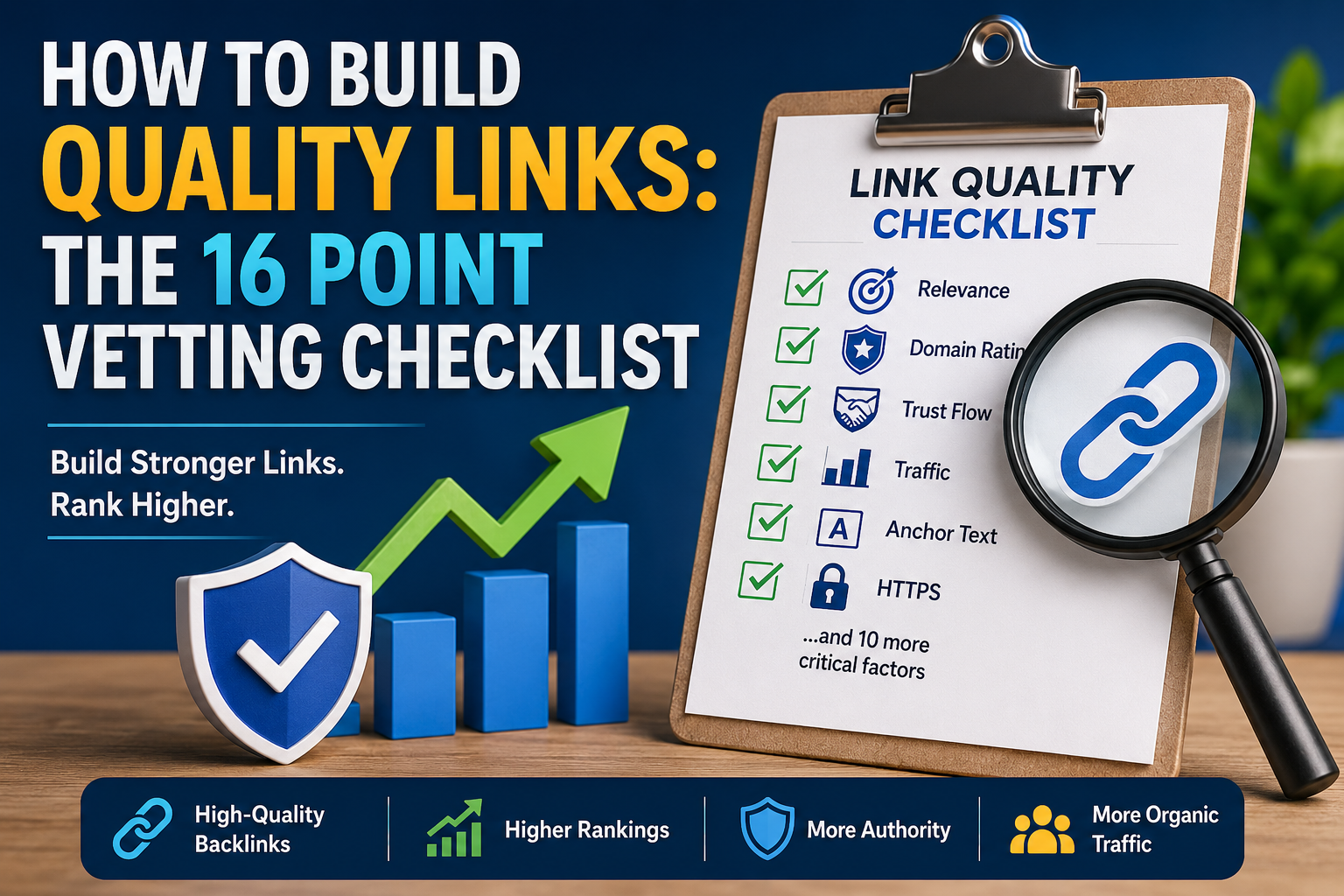
Not every local link deserves your time. The objective isn’t volume, it’s impact. The right links strengthen rankings, bring in real traffic, or build lasting authority. That’s why link opportunities should be assessed carefully before any outreach begins.
Here’s how to evaluate them:
Before judging the site, be clear about why you want the link in the first place.
Some links are meant to strengthen rankings for a specific page. Others are about building overall domain authority, sending real referral traffic, or reinforcing topical relevance in a local market. When the goal is clear, it becomes much easier to decide whether a link opportunity is aligned or just a distraction.
Authority metrics like Domain Authority, Authority Score, or Citation Flow are useful for sorting opportunities quickly. They help you understand whether a site has earned trust through its own backlink profile.
That being said, these numbers are just for direction, not your definitive answer. Having a high score doesn’t automatically make a link valuable, and having a lower score doesn’t always mean that a site is irrelevant, especially when it comes to local SEO, where proximity and relevance matter more than any raw authority.
Traffic shows whether a site has real visibility. A website with moderate authority but consistent, growing traffic often delivers more value than a high-metric site no one actually reads.
It also brings a second layer of benefit: real people who can engage with your content, become customers, or mention your business elsewhere.
What matters most is the trend. Consistent growth is a good signal. Sharp or prolonged decline usually isn’t.
An active site is far more likely to pass value. You don’t need a publisher that posts daily. You need one that publishes consistently enough to stay indexed, crawled, and relevant. Sites that haven’t updated in months often struggle to rank themselves, which limits the value of their outbound links.
Consistency signals longevity, both to search engines and to readers.
There’s one simple rule that works well here: would you be comfortable publishing your content on this site?
If the answer is no, the link probably isn’t worth chasing. High-quality sites tend to survive algorithm changes, retain traffic, and grow authority over time. That makes their links more durable and more valuable in the long run.
Low-quality sites are short-term wins with long-term risk.
Relevance doesn’t mean identical industries. It means overlapping audiences.
A local real estate business doesn’t only belong on real estate sites. Finance, interior design, moving services, and neighborhood resources all make sense if they serve the same local audience.
What you want to avoid are sites that publish everything for everyone. Broad, unfocused sites rarely build strong authority in any one area.
Finally, consider how realistic the opportunity is.
A high-value link that’s nearly impossible to earn may not be the best starting point. Likewise, easy wins that offer little impact shouldn’t dominate your strategy. The strongest link-building plans prioritize opportunities where value and likelihood intersect.
When in doubt, focus on links that are:
Those tend to compound over time.

Sure, building local links can give your SEO a major boost, but only if it’s done thoughtfully. But with the wrong approach, you can waste time, harm rankings, or damage your reputation.
Here are the most common link building mistakes to avoid and what not to do:

To help you make the most of your local link building efforts, here are answers to common questions about strategy, maintenance, and impact:
Local backlinks signal relevance to search engines, which helps your business show up in location-based results, including on mobile devices.
Mobile users searching for “near me” rely on these signals to find accurate, nearby options.
Social media links are usually nofollow links and don’t directly have any SEO value.
However, they increase visibility, engagement, and brand awareness locally, which can indirectly support your link-building efforts.
Perform routine backlink audits, ideally quarterly.
Links can break, be removed, or lose value over time, so routine audits help ensure your profile stays strong, relevant, and free from harmful or low-quality links.
Reviews don’t directly create backlinks, but they strengthen local SEO credibility. High-quality reviews can encourage local sites and directories to link to your business naturally.
Local backlinks still play a decisive role in who wins local search. But the results don’t come from volume or shortcuts. They come from earning links that are relevant, editorially placed, and rooted in real local context. When done right, local link-building strengthens rankings, builds trust, and drives traffic that’s actually ready to convert.
The challenge is consistency, finding the right opportunities, vetting sites, and earning links the right way, which takes time and judgment. That’s where Profit Engine comes in.
Our team focuses on bespoke outreach, vetted placements, and strategy-led link-building, using guest posts, niche edits, HARO, and tiered campaigns tailored to your industry and goals: no recycled tactics, no low-quality networks, just links built to last.