Contents
Demo Link
Imagine you’ve just stumbled across a newly launched blog in your industry. The content is brilliant, the design is immaculate, and the insights are genuinely unique. You want to partner with them, perhaps pitch a collaboration, or secure a backlink. But then you plug their URL into a traditional SEO tool, and your heart sinks.
Their domain score is a 2. Their backlink profile is non-existent. According to traditional metrics, this website is virtually invisible.
If you strictly follow the old rules of SEO, you'd walk away. But in 2026, walking away means leaving incredible opportunities on the table. The digital landscape is brimming with emerging websites that lack historical data but possess immense future value. The challenge isn't finding these sites—it's accurately evaluating their potential when traditional scores fall short.
This is where AI-powered vetting changes the game. By looking past lagging indicators and focusing on real-time content quality, user signals, and growth trajectories, AI helps us discover hidden gems long before the rest of the market catches on.
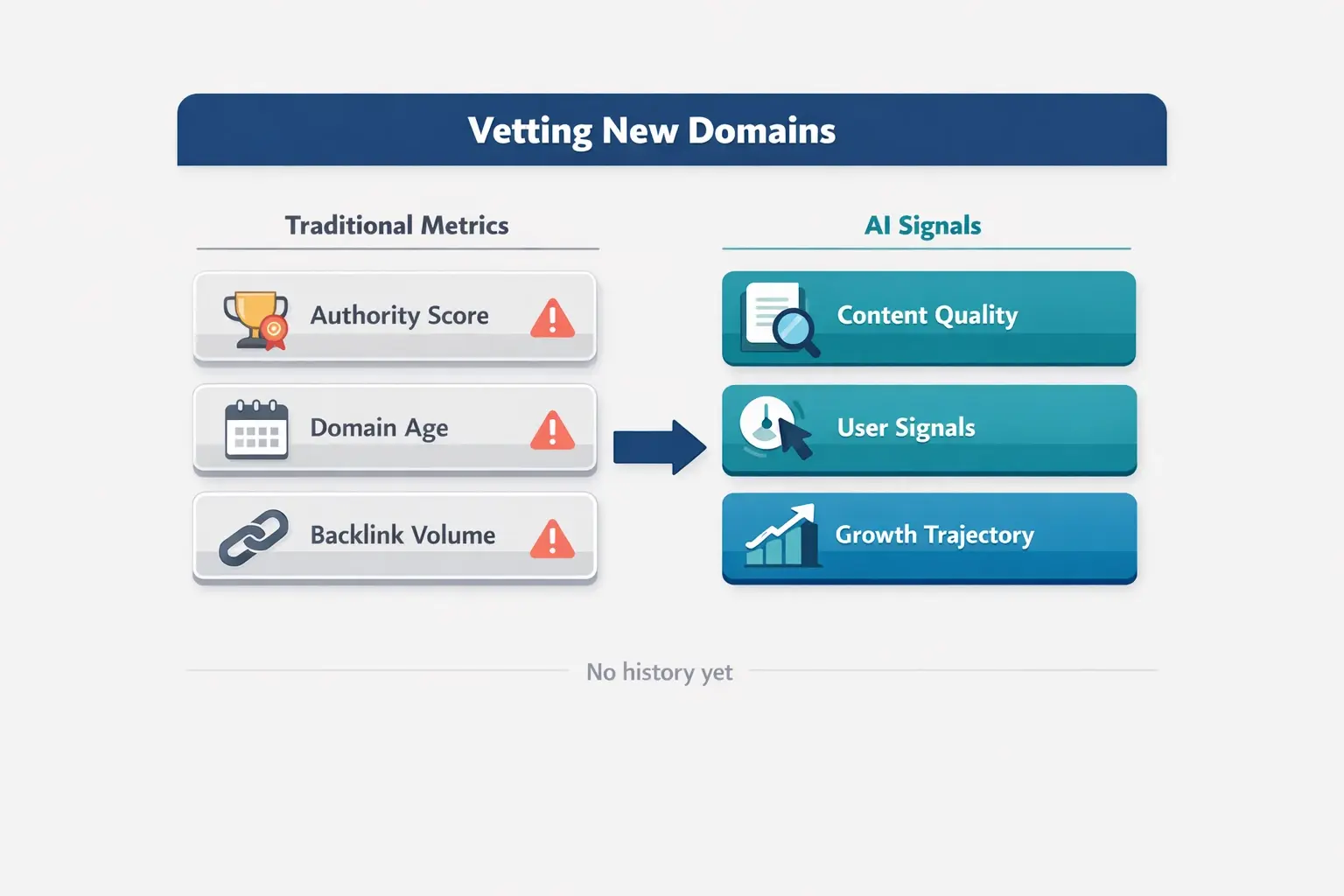
For years, the gold standard for website evaluation has been historical authority. We've been trained to look at domain age, massive backlink profiles, and third-party authority scores.
But these are lagging indicators. They tell you what a website has achieved over the past five years, not what it's building today.
If you are wondering exactly what is page authority or domain authority in this context, they are predictive scores developed by third-party SEO tools to estimate how well a site will rank. While helpful, page authority heavily relies on an established history of incoming links.
Because emerging websites haven't had the time to accumulate these links, they are naturally penalized by these tools. Relying solely on these numbers means missing out on securing early, powerful partnerships that can yield high-quality natural backlinks as the domain grows.
AI-powered vetting flips the script. Instead of asking, "Who has linked to this site in the past?" AI asks, "Does this site provide genuine value to human readers right now?"
Through Natural Language Processing (NLP) and semantic analysis, AI tools don't just scan for keywords; they "read" for meaning. When evaluating an emerging domain without established metrics, AI looks for:
By mapping these early signals, AI acts as a sophisticated radar, spotting quality that traditional tools are blind to.
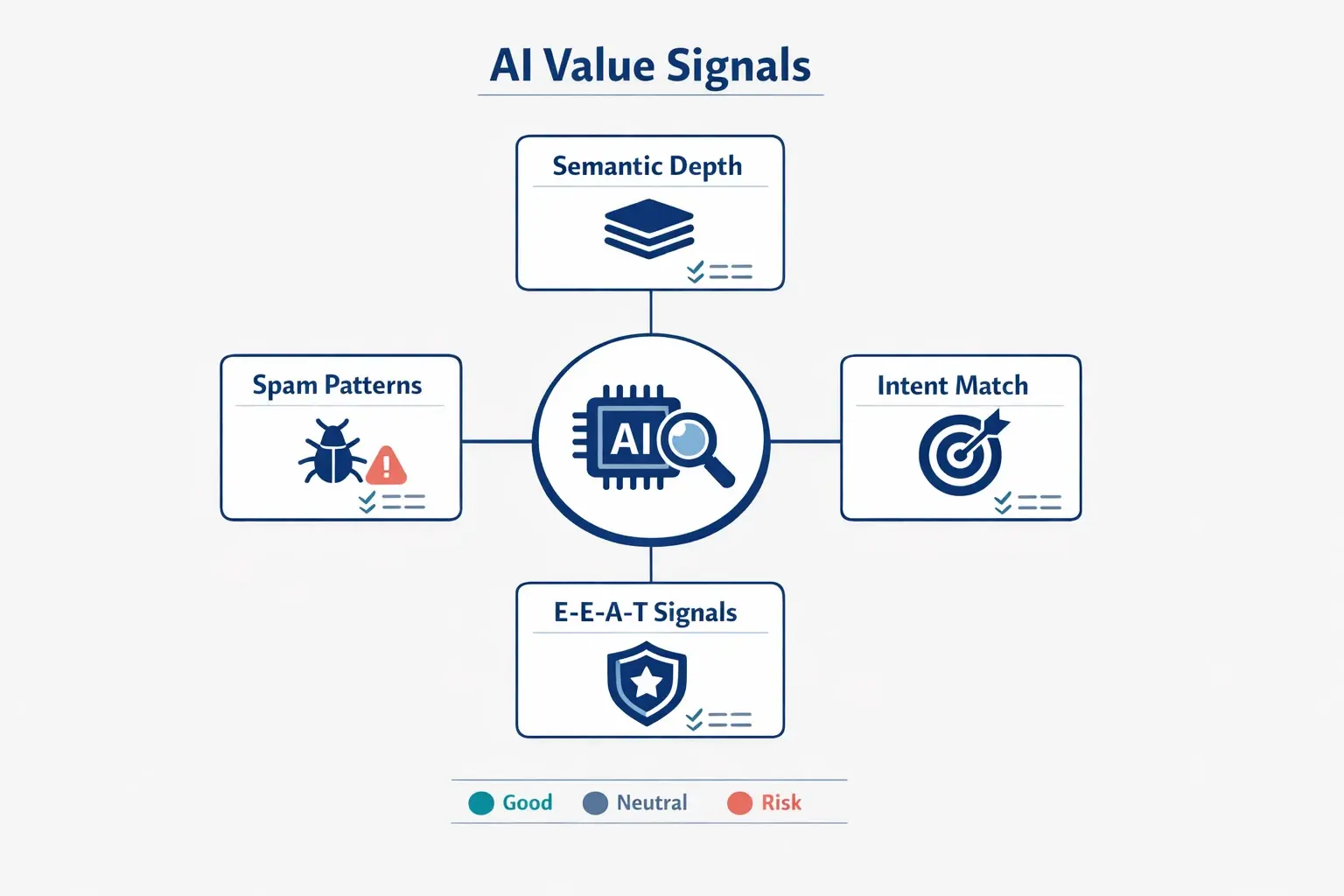
When you strip away historical data, what is left to evaluate? AI categorizes the potential of emerging websites into three core pillars.
Before AI, conducting a thorough b2b content marketing audit to assess the depth of a potential partner's blog required hours of manual reading. Today, AI models can instantly evaluate how a new website structures its arguments. It analyzes whether the site uses natural phrasing, addresses search intent accurately, and avoids spammy, keyword-stuffed patterns. If a new site is publishing highly relevant, deeply researched articles, AI flags it as a high-potential asset.
Even with low traffic, user behavior tells a story. AI systems can extrapolate data from early engagement signals. How is the site structured for the user? Does it have a logical, clean architecture that would keep a visitor reading? Are there intrusive ads that typically cause high bounce rates? AI assesses the environment of the website to predict future user satisfaction.
Perhaps the most powerful application of AI is its ability to identify momentum. AI can analyze "topical clustering"—how quickly and comprehensively a new website is building out interlinked content around specific subjects. A site launching 20 deeply connected, high-quality articles in a month shows a much stronger growth trajectory than an older site posting thin content sporadically.
Understanding the theory is great, but how do you actually apply this? You don't need a degree in computer science to vet sites with AI. You just need a structured approach.
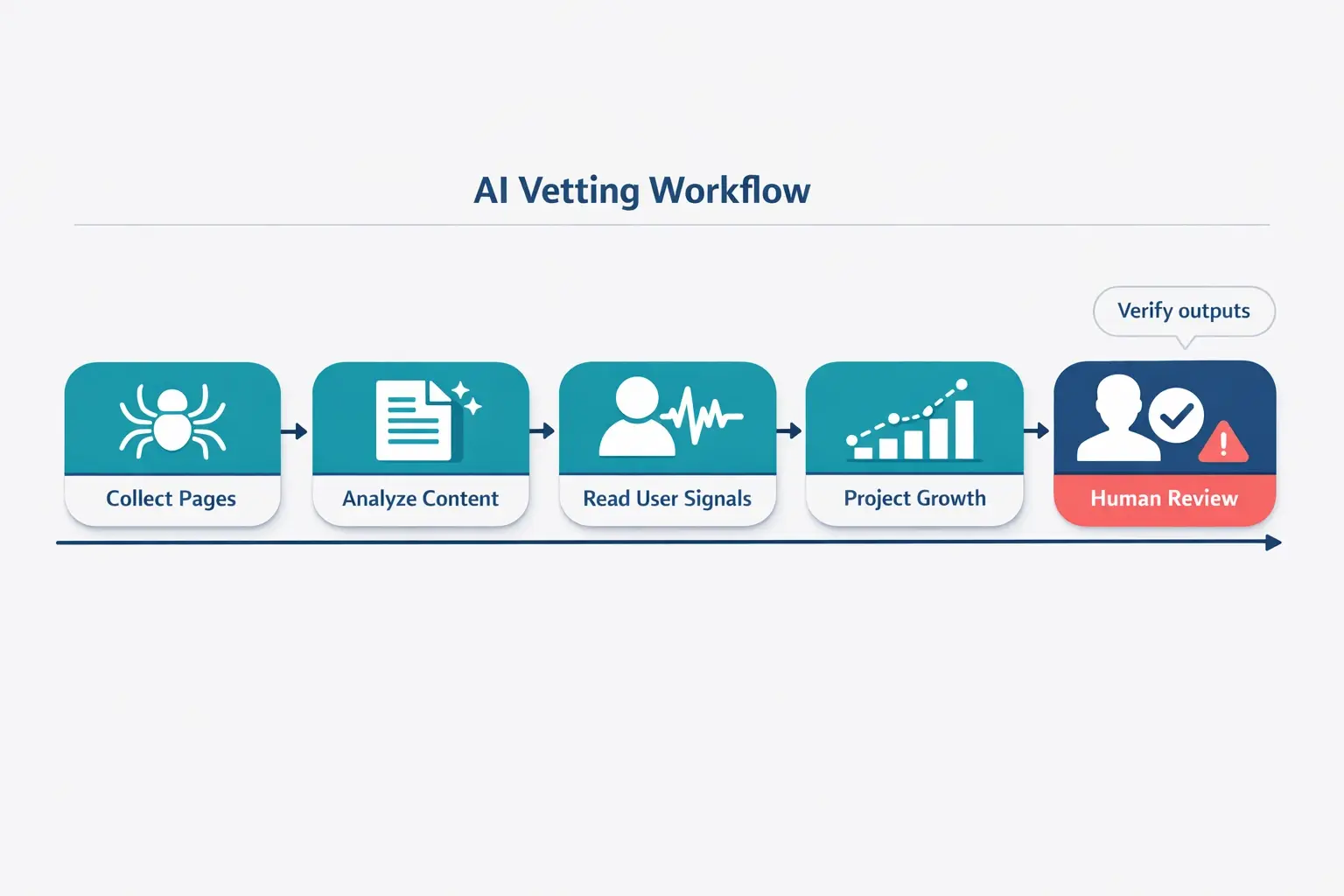
If you are developing your own link building checklist, consider integrating these AI-assisted steps:
Let’s look at a realistic scenario.
The Target: A three-month-old financial technology blog. Traditional Metrics: Domain Score of 4. Zero authoritative backlinks. The Human Eye: Looks clean, but is it worth the effort to reach out?
When run through an AI vetting framework, the results tell a completely different story. The AI identifies that the author is writing with highly specific industry terminology (NLP semantic richness). It notes that the articles are structured in tightly woven topic clusters, demonstrating a clear roadmap toward becoming a topical authority. It also spots that the site is entirely free of AI-generated fluff, possessing a distinct, human point of view.
By securing a partnership with this site now—perhaps by exchanging insights or capturing brand mentions seo value early—you are investing on the ground floor. In six months, when traditional metrics catch up and that domain score hits 40, you’ll already be reaping the rewards of an established relationship.
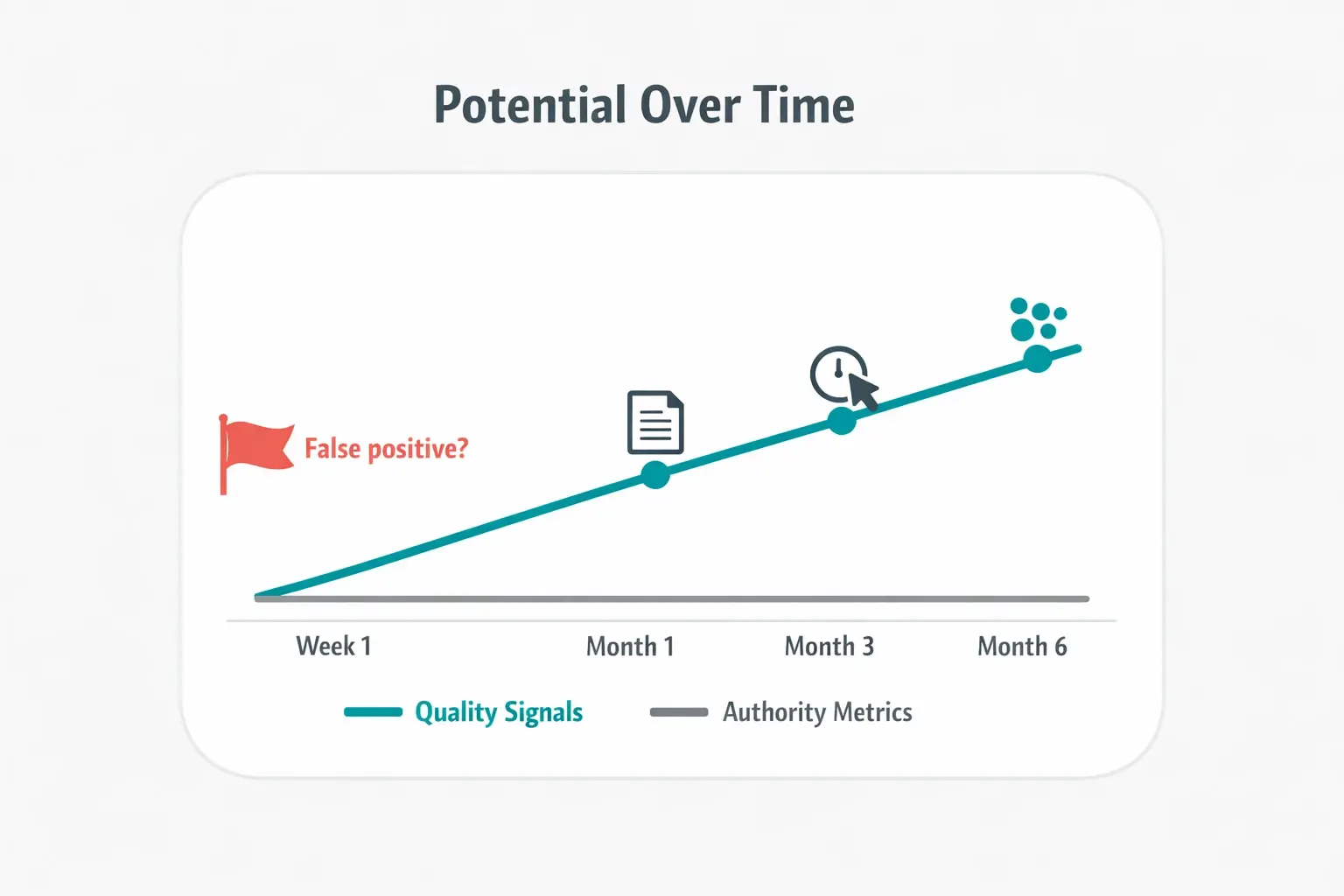
As powerful as AI is in 2026, it is not infallible. Handing over 100% of your website vetting to algorithms is a recipe for disaster.
AI can sometimes "hallucinate" expertise where there is none, or show bias toward content structured in a highly formulaic way, missing the nuanced brilliance of a uniquely styled blog.
This is why top-tier SEO strategies always employ a "human-in-the-loop" methodology. Whether you are running a massive enterprise seo audit or just vetting a handful of niche blogs, AI should serve as your radar, not your commander.
AI sifts through the noise to highlight the sites with potential. Then, human SEO experts step in to review those flagged sites, ensuring they align with your brand's specific values, ethical standards, and long-term goals. This tandem approach is exactly how to manage your backlinks effectively—using machine speed for discovery and human wisdom for quality assurance.
Waiting means increased competition. By the time a website boasts high traditional metrics, everyone else wants a backlink from them too. Getting in early builds stronger relationships and is often much more cost-effective.
Yes, to a high degree. While links are votes of confidence, AI evaluates the reasons someone might vote for it: factually accurate information, expert tone, clear author credentials, and logical site structure.
Large Language Models (LLMs) with advanced semantic capabilities are excellent for content analysis. However, dedicated SEO AI tools that combine web crawling with NLP are the most efficient for full-scale audits.
Not entirely. Traditional metrics still offer a reliable snapshot of historical authority. The future is a hybrid approach where AI assesses real-time content value and potential, while traditional metrics track historical trust.
Rethinking how we evaluate website quality is a critical step for modern digital growth. By expanding your view beyond lagging metrics, you open your brand to an entirely new tier of emerging, high-quality digital real estate.
Start small. The next time you encounter a new website with a low domain score but stellar content, don't just click away. Run a quick AI prompt to evaluate its semantic depth and topical clustering. You might just find your next great digital partner.
Building a robust, authoritative online presence requires staying ahead of the curve. By embracing AI as an educational and analytical ally, you are well on your way to mastering the search landscapes of tomorrow.