Contents
Demo Link
Imagine hitting "send" on a highly targeted outreach campaign, leaning back in your chair, and watching enthusiastic, genuine replies roll into your inbox.
In 2026, AI promises exactly this kind of frictionless efficiency. Yet, for many marketers and SEO professionals, the reality looks quite different: stagnant open rates, ignored pitches, and an inbox full of automated rejections.
Why? Because the landscape of link building outreach has fundamentally shifted. We are now in the era of "AI-ception," where your AI-generated outreach email is likely being read, analyzed, and swiftly archived by your recipient's AI spam filter before a human eye ever sees it. Over the past two years, average reply rates for mass cold outreach have plummeted by 50%, while over half of all spam is now entirely AI-generated.
The old model of "personalization at scale"—which usually just meant swapping out [First Name] and [Company Name]—is officially dead.
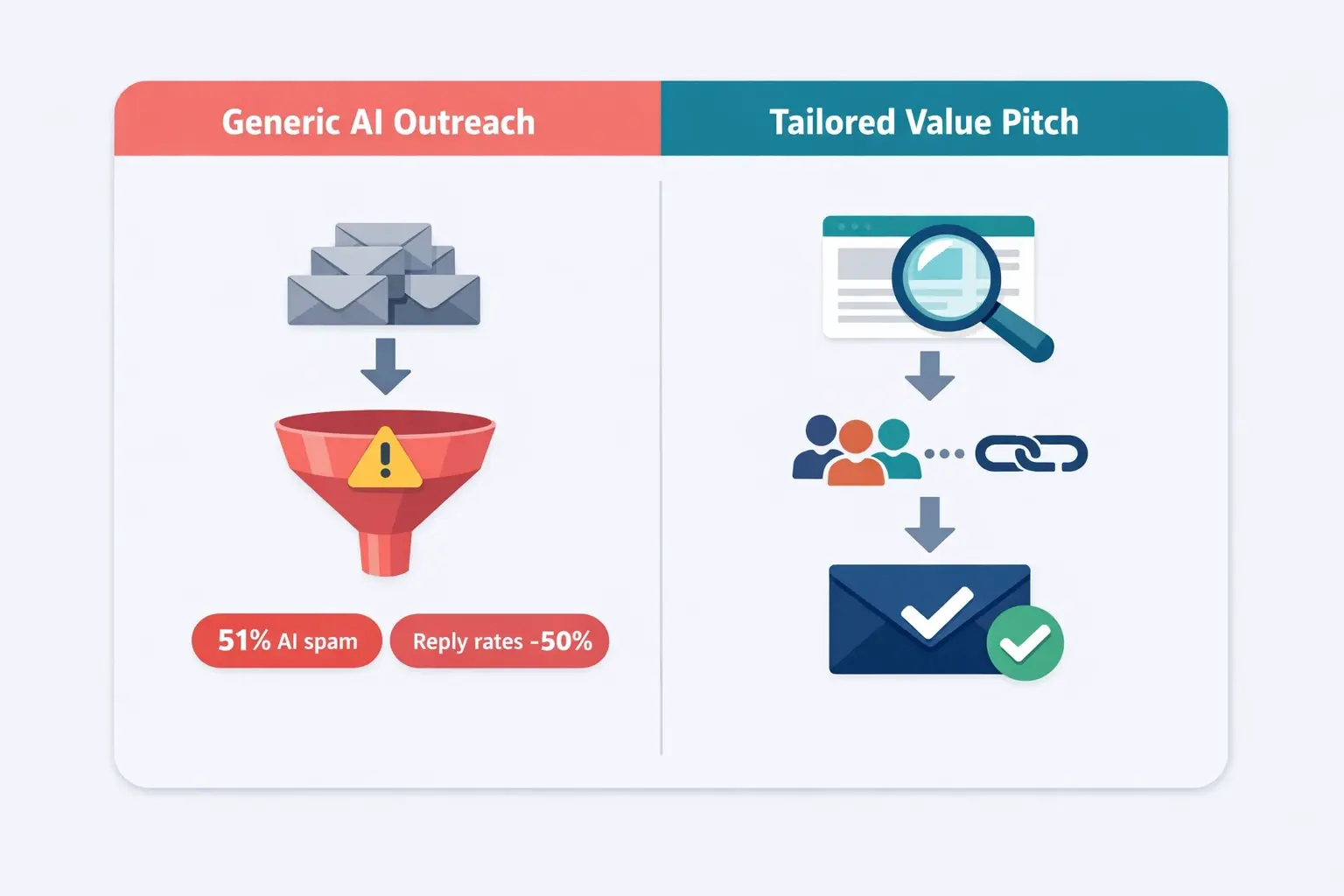
To win today, you have to move beyond superficial personalization and embrace true, deep-level tailoring. This guide explores how to leverage AI correctly: not as a cheap ghostwriter, but as a brilliant research assistant that uncovers unique value propositions for every single prospect on your list.
A value proposition is a clear statement that explains how your content solves a problem or improves a situation for a specific audience. Historically, determining this for hundreds of link prospects took hours of grueling manual research.
Today, AI can analyze vast amounts of data in seconds to find the perfect pitch angle. But to make this work, you must feed the AI the right inputs. Genuinely effective AI-driven outreach relies on analyzing three core signals:
Instead of just recognizing what a blog post is about, advanced AI models can now analyze a recipient's entire content library to identify gaps. It can spot outdated statistics, missing perspectives, or topics they've barely scratched the surface of. For example, if a target site writes heavily about marketing but lacks resources on predictive analytics, AI identifies this content gap as your "in."
Who is reading the recipient's site? AI can cross-reference their content with industry trends to build a profile of their average reader, including their specific pain points and the language they use. Your pitch then becomes less about your resource, and more about how your resource serves their readers.
This is the holy grail of tailored pitching. What kind of content does this specific editor actually link to? Do they prefer data-heavy whitepapers, actionable infographics, or deep-dive case studies? AI can scan their recent articles to find out. It can even automate tedious tasks like finding unlinked mentions ahrefs tools might have missed, giving you a warm, behavioral starting point for your pitch.
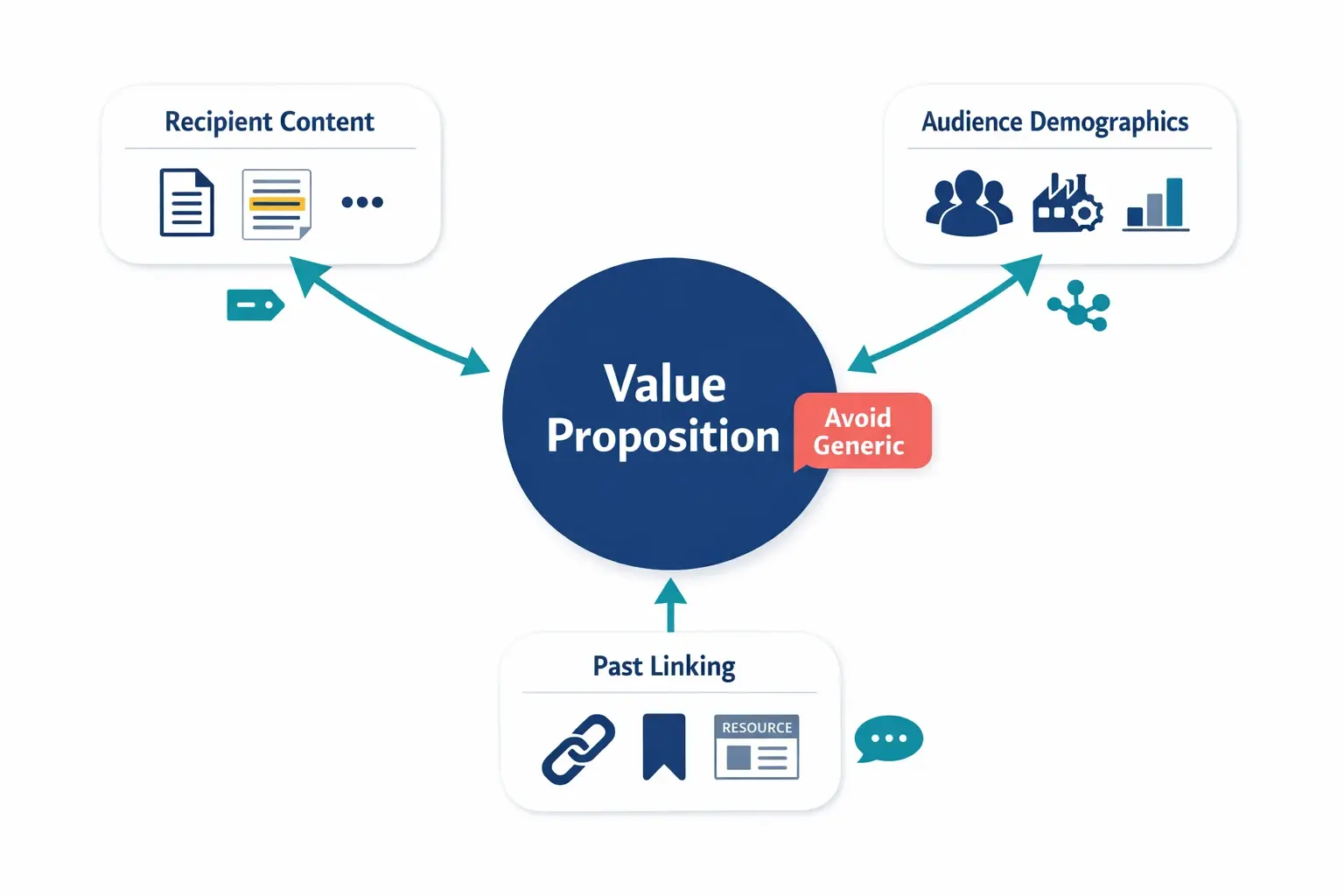
By combining these three signals, AI shifts your approach from "Here's my article" to "I noticed your readers struggle with X, and while your recent post covered Y beautifully, I've created a data-backed resource that fills the gap perfectly."
A crucial concept to remember is that "Powered by AI" is not a value proposition in itself. AI is simply the engine that uncovers the value. Relying entirely on an AI model to draft and send your emails is a one-way ticket to the spam folder.
Just as content creators constantly ask, "does ai content rank in google without human editing?", email recipients (and their spam filters) are asking, "Was this email written by a bot?"
To bypass these filters and connect with real humans, you need a collaborative workflow:
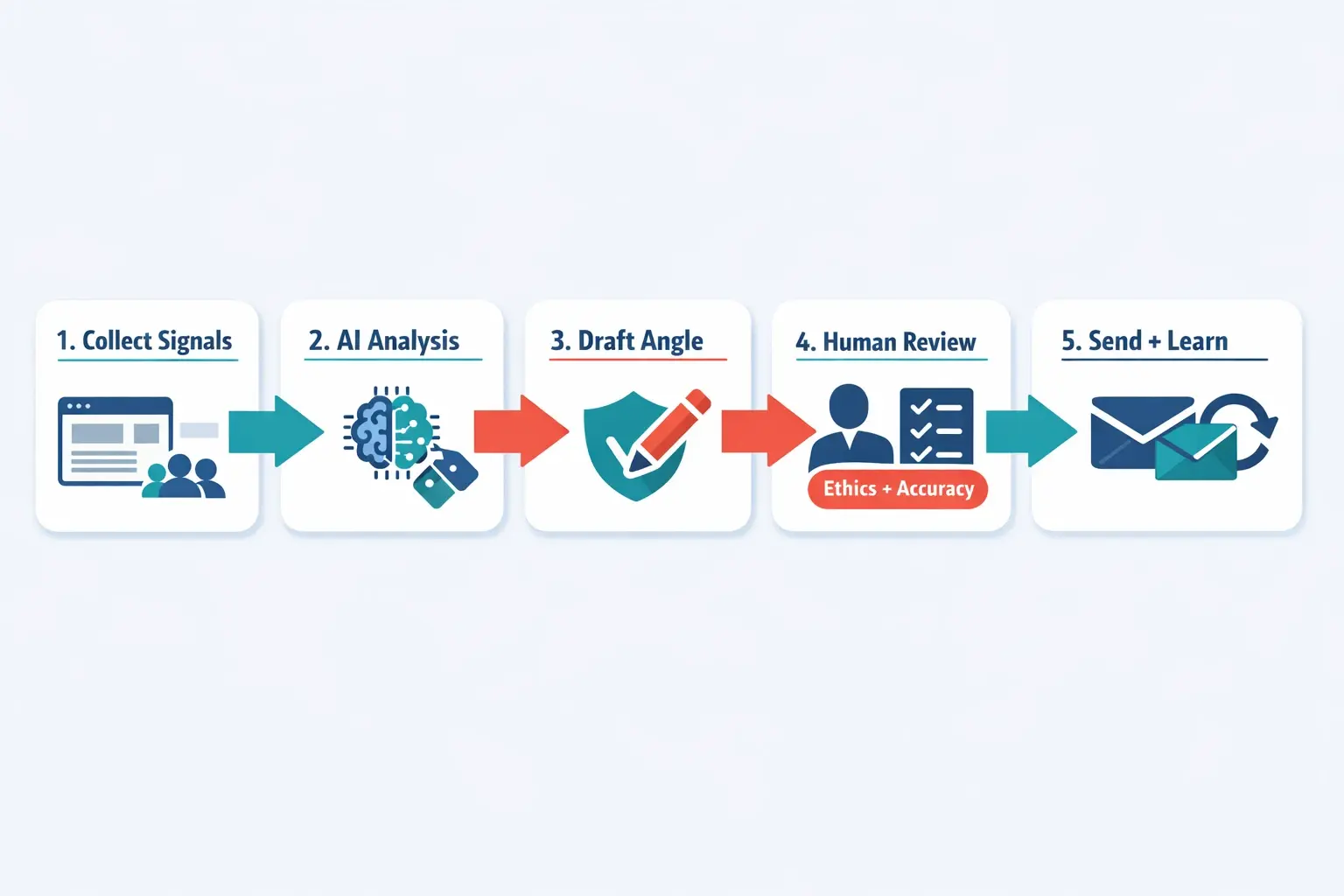
Before any campaign goes live, running your strategy through a rigorous link building checklist ensures that your AI-assisted pitches maintain the highest quality standards, prioritizing authoritative relationship-building over sheer volume.
If you're using AI properly, your success metrics must evolve. It's no longer about how many thousands of emails you can send in a day. It’s about the quality of the connections you build.
Effective b2b link building in 2026 demands that we optimize for outcomes that matter: real replies, successful content integrations, and long-term partnerships.
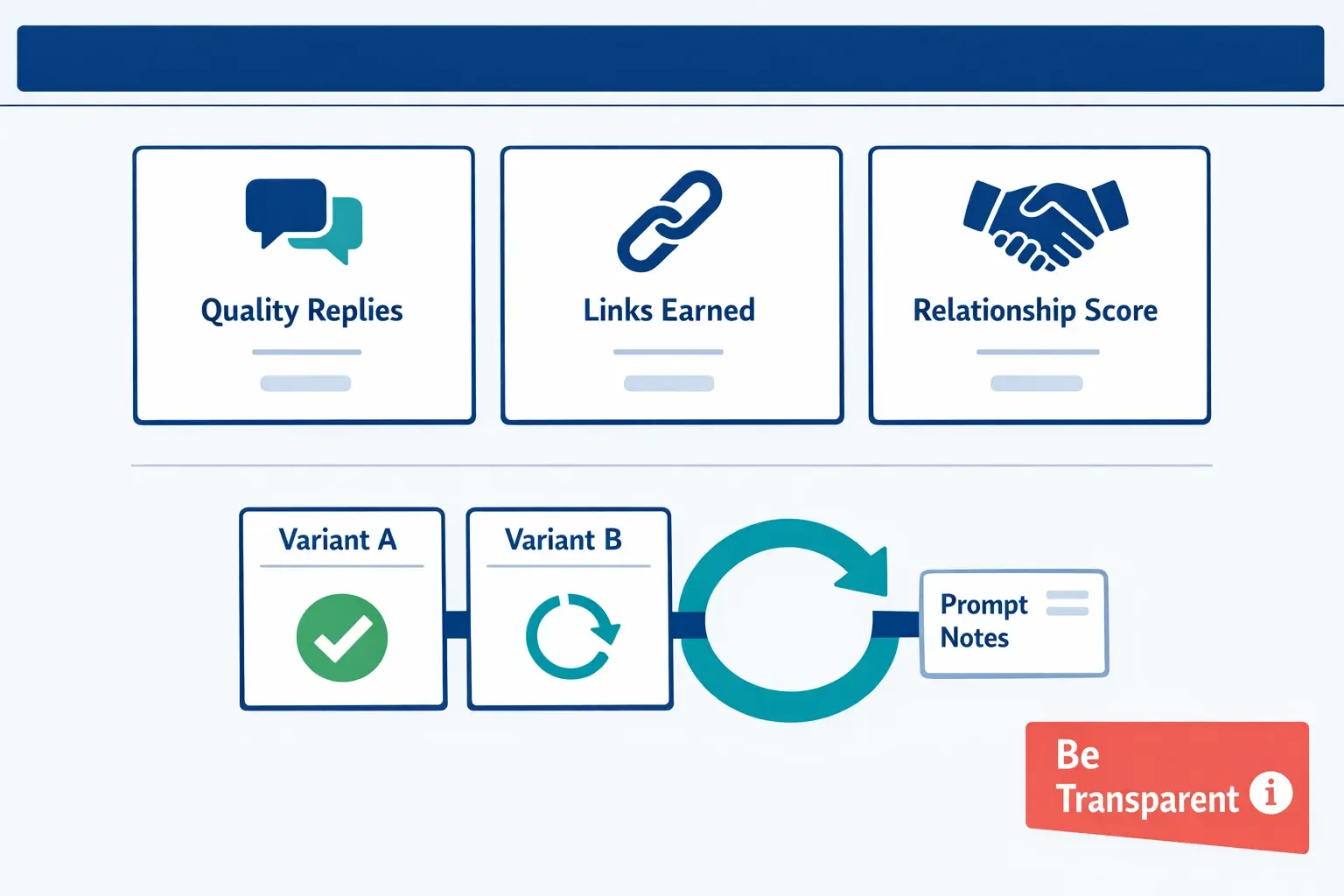
To master this process:
It is the process of using Artificial Intelligence to analyze a target website's content, audience, and past linking behavior to discover the exact, unique reason why linking to your resource would be highly beneficial to them. It moves beyond generic reasons to hyper-specific, data-backed arguments.
The secret is specificity that cannot be automated at scale. Recipient AI filters look for generic phrasing, lack of context, and mass-send patterns. By using AI to deeply research individual targets and applying human oversight to ensure a natural, empathetic tone, your pitches read as 1-to-1 communication, bypassing automated filters.
Always prompt your AI to look for:
Absolutely not. AI handles the time-consuming research phase, allowing you to scale the preparation of your outreach. The actual relationship building—the human-to-human connection, the follow-up, the mutual value exchange—still requires a genuine human touch.
Transitioning from bulk emailing to AI-driven tailored outreach doesn't happen overnight. It requires shifting your mindset from "quantity of sends" to "quality of connections."
Start small. Choose a list of 20 high-value prospects you'd love to partner with. Instead of loading them into an automated sequence, use an AI tool to analyze their recent blog posts. Ask the AI to identify one specific pain point their audience has that your content solves. Draft the pitch yourself using that AI-generated insight.
Notice the difference in how the pitch feels. More importantly, notice the difference in how the recipient responds. When you use AI to uncover genuine value rather than just taking shortcuts, you don't just build links—you build lasting industry authority.