Contents
Demo Link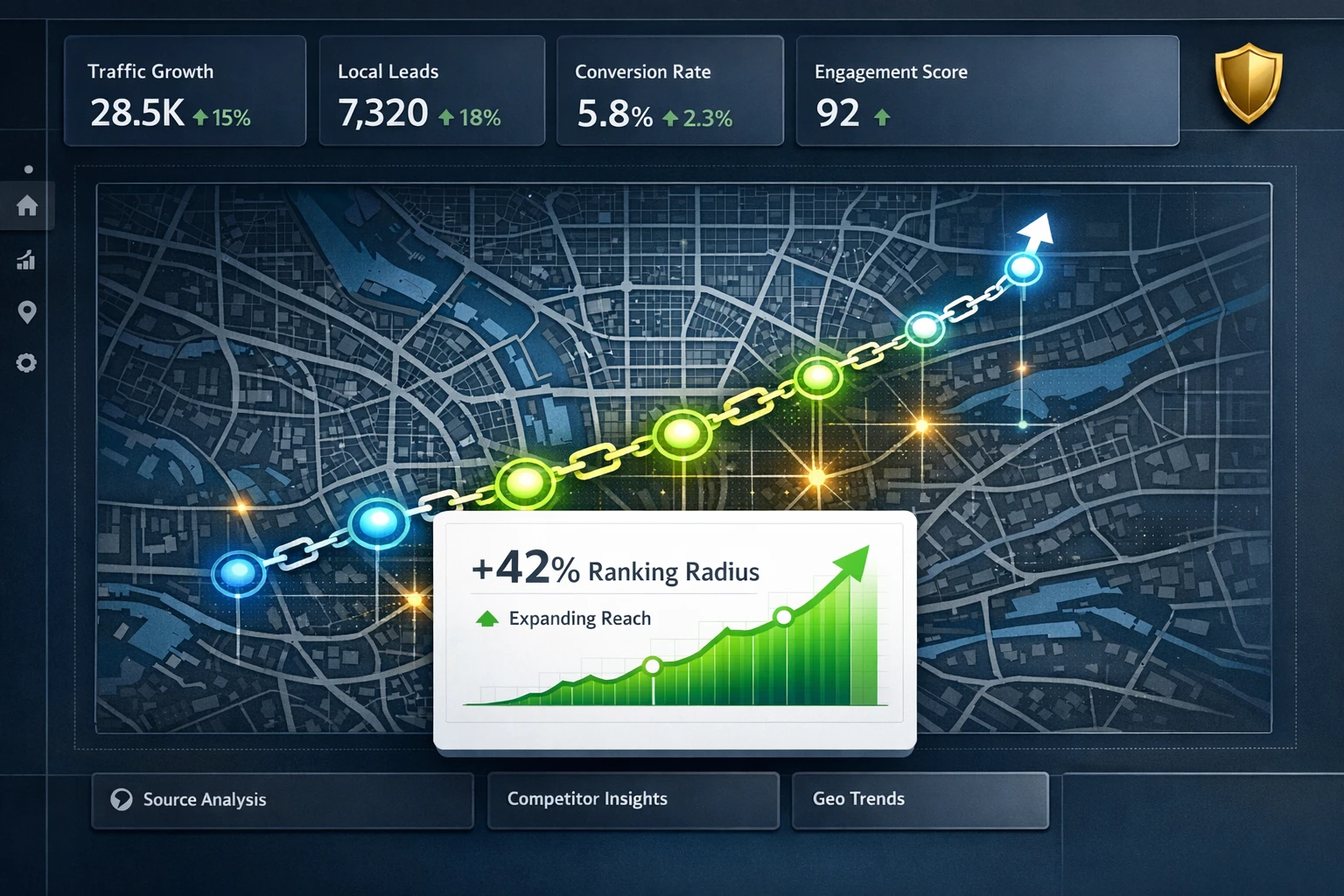
If you are evaluating your local SEO strategy in 2026, you are likely feeling the friction of a landscape in transition. Traditional directory submissions, mass citation campaigns, and generic guest posting simply don't move the needle the way they did just a few years ago.
Today's search ecosystem has fundamentally shifted from traditional "link building" to what industry leaders now call "source building." With the rapid integration of Large Language Models (LLMs) like ChatGPT, Perplexity, and Google's AI Overviews into the user journey, the underlying question your target audience is asking isn't just "Who ranks first?" It’s "How do I ensure my local business is the one AI search engines confidently cite as the best in my city?"
To bridge the gap between basic WordPress blogging and sophisticated regional authority development, we have to look past the outdated tactics and embrace a geo-targeted authority framework powered by AI.
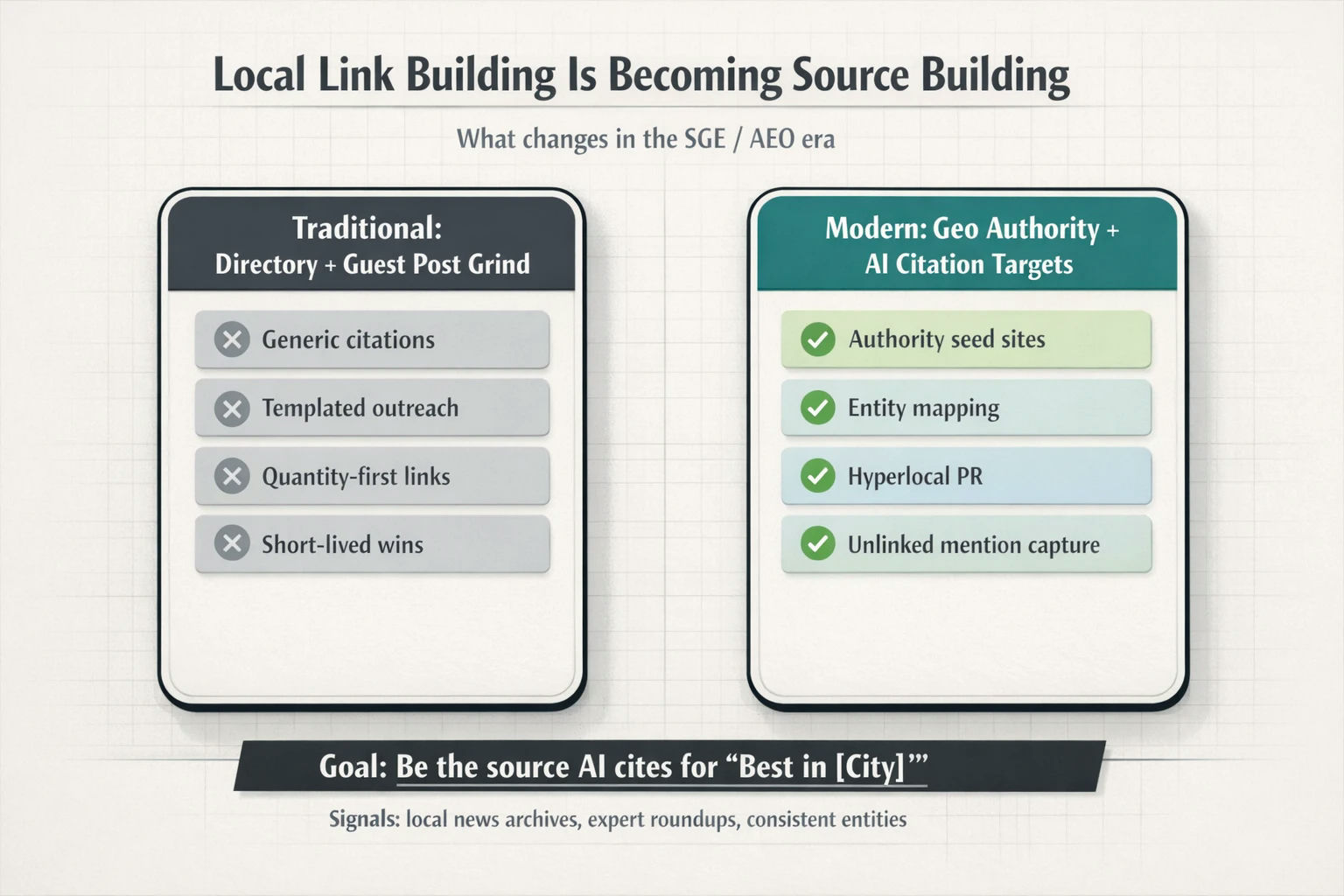
Historically, dominating a local market meant scraping hundreds of local business directories and ensuring your Name, Address, and Phone Number (NAP) were perfectly aligned. While foundational consistency still matters, LLMs heavily discount easily manipulated directory links.
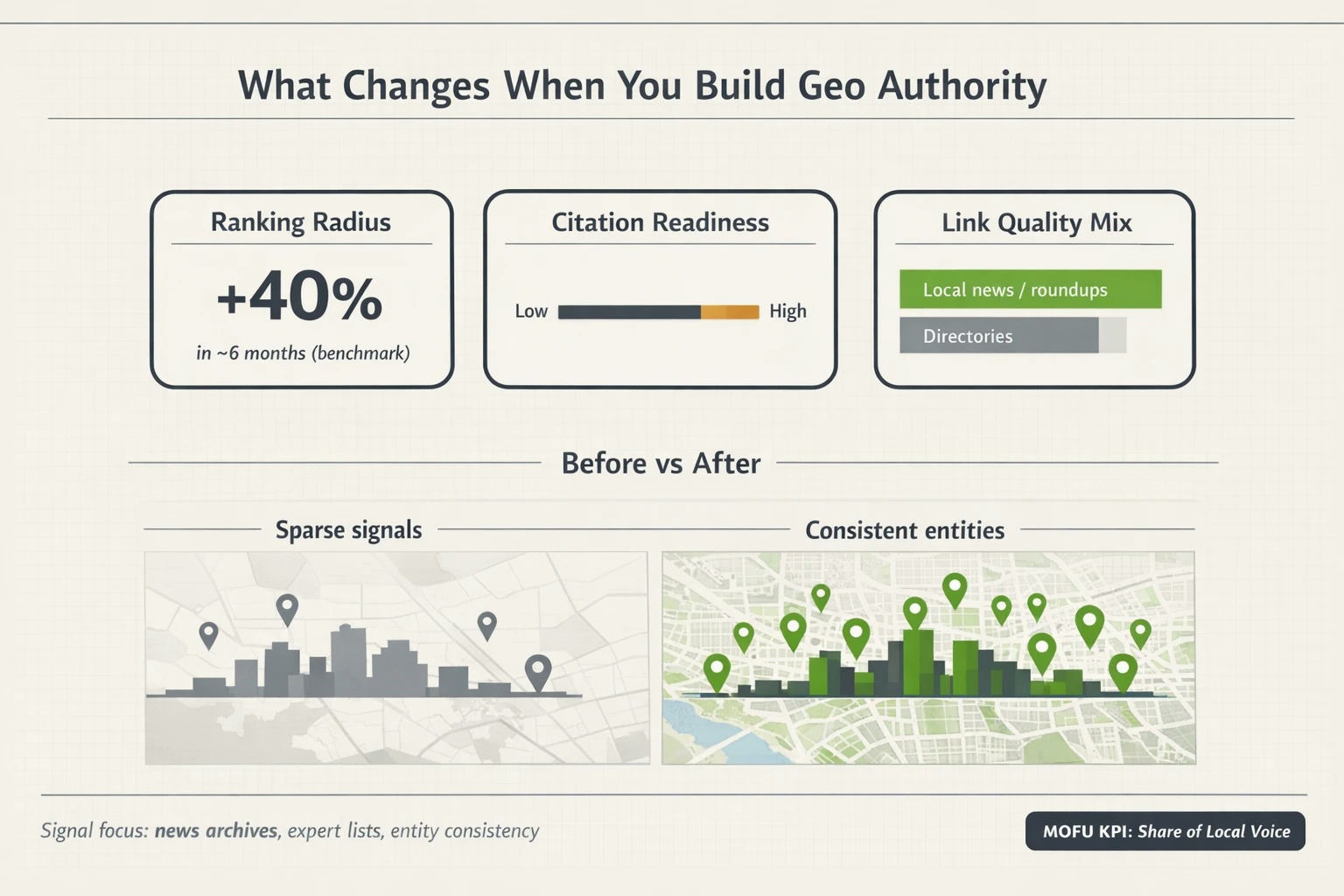
Instead, modern AI search engines prioritize context. They actively seek out real-world practitioner insights, expert roundups, and local news archives. In fact, current ranking patterns show a significant surge in visibility for brands cited in indexed LinkedIn expert posts or featured in hyper-local publications. Google and AI agents want to see that you are an active, trusted entity within a specific geographic community, not just a line item on a YellowPages clone.
For decision-makers looking to acquire the best backlinks for local seo, the focus must shift entirely toward high-quality, heavily vetted sources that actively inform AI models.
Top-tier frameworks—like Jeremy Moser’s C.A.T.S. framework at uSERP—have popularized the concept of source building by emphasizing the "why" behind AI citations. However, many of these high-level strategies lack the boots-on-the-ground implementation necessary for smaller local niches.
To win your region, you need to reverse-engineer what AI search engines already trust. What local sources is ChatGPT currently citing when users ask for services in your market? By feeding your target queries into these models and analyzing the output, you can map the exact "Authority Seed Sites" driving the answers.
This is the core of generative engine optimization: transforming your brand from a participant in the local search results into the definitive, universally cited answer.
To systematically capture regional market share, successful brands are moving away from ad-hoc link acquisition and adopting a repeatable, AI-driven loop.
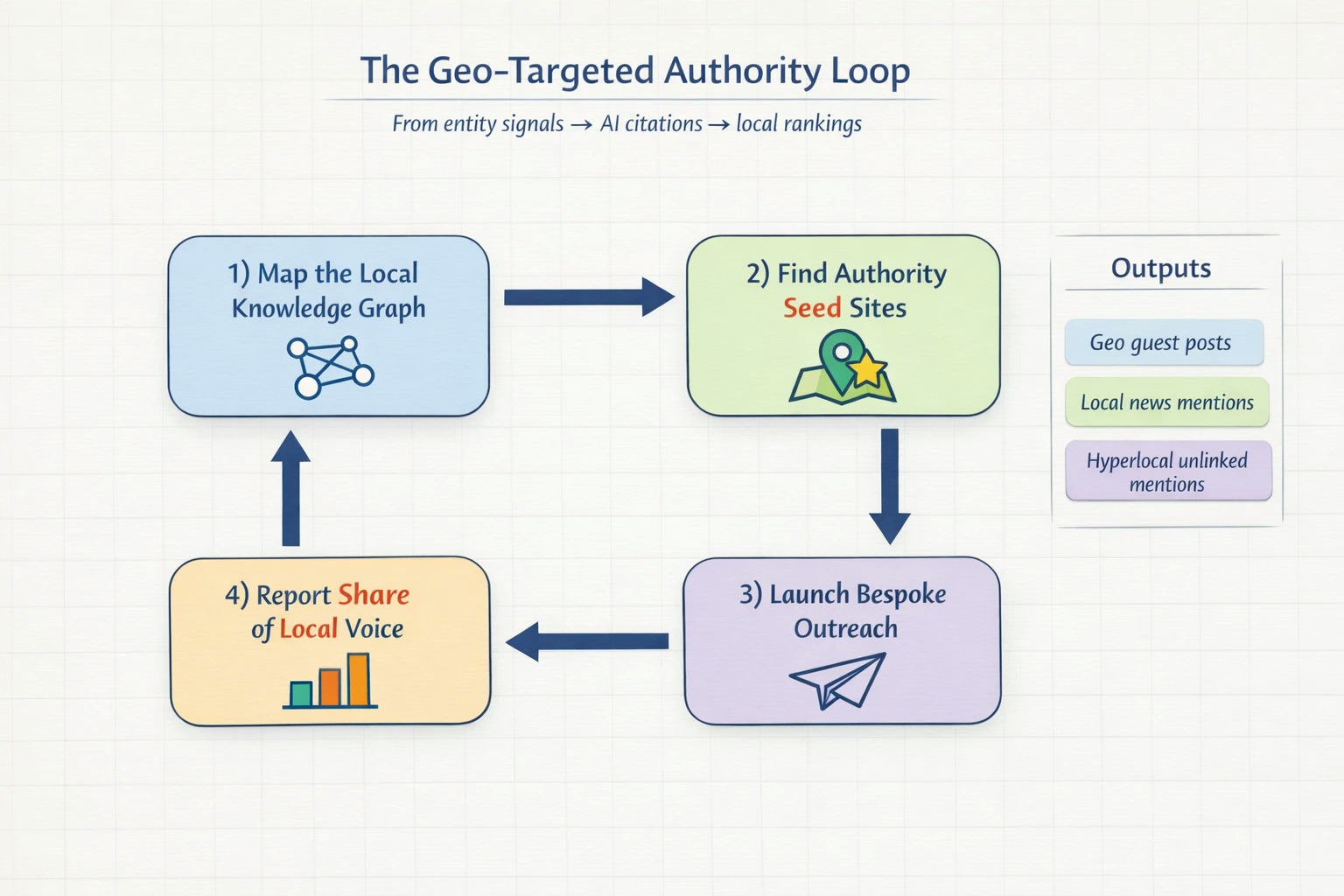
Before building a single link, AI should be used to map the "Local Knowledge Graph" of your target city. By analyzing competitors who dominate local AI answers, LLMs can identify missing local associations in your own profile. Are competitors routinely mentioned alongside a regional university or a specific local chamber?
Targeting high-intent geographic keywords during this mapping phase ensures you are prioritizing the localized entities that AI models actually weigh heavily when generating local answers.
Once you've identified your Authority Seed Sites, you need to acquire placements. However, generic, templated outreach is treated as spam by modern publishers.
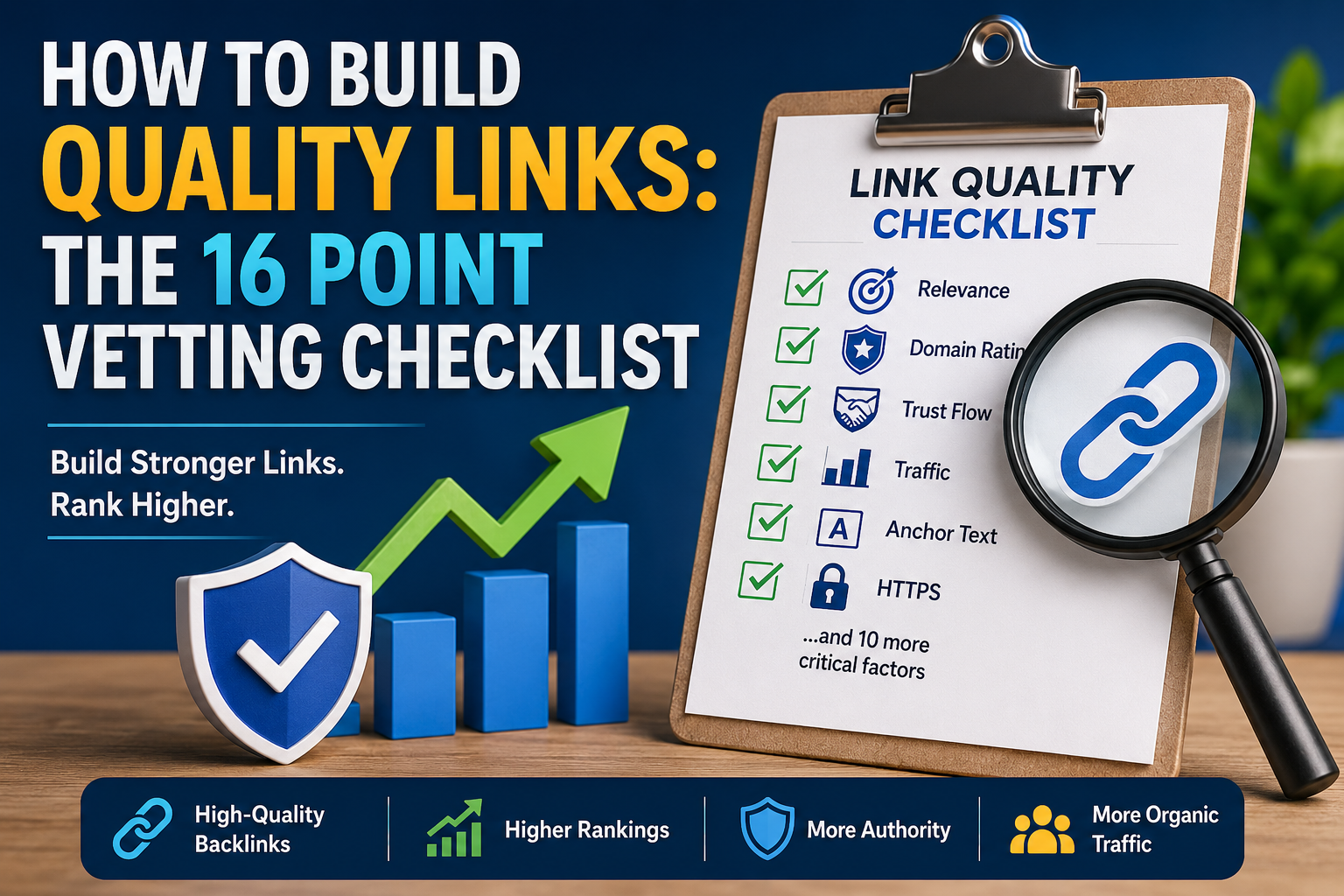
Using AI, you can execute bespoke link building outreach at scale. LLMs can analyze the recent publications, tone, and specific interests of local journalists or neighborhood bloggers to draft hyper-personalized pitches. Rather than asking for a link, you are pitching localized collaborations, regional expert commentary (via platforms like HARO), or even identifying local charity sponsorships that naturally yield high-authority domain mentions. To ensure safety and efficacy, every prospect should pass through a rigorous, 18-point quality assurance checklist to guarantee relevance and mitigate any spam signals.
Finally, tracking success requires moving beyond simple 10-blue-link rank tracking. You need to measure your "Share of Local Voice." AI-driven platforms can now visualize how often your brand is cited as the primary solution across varying local zip codes.
Consider what industry experts refer to as the "Indianapolis Factor"—the reality that winning a specific regional market requires nuance that broad SEO tools miss.
For a regional services client aiming to dominate Indianapolis, we didn't just build links; we executed targeted digital pr campaigns. By utilizing AI sentiment analysis on local news cycles, we predicted which community stories would gain regional pickup. We then positioned the client to provide expert commentary on those exact topics.
The result? They weren't just getting backlinks; they were securing unstructured brand mentions for seo across top-tier regional publications. When local users asked AI search engines for recommendations, the LLMs cross-referenced these high-trust news mentions and confidently cited the client as the leading local authority.
As you evaluate your internal processes or prospective agency partners, the technology stack they use is a massive indicator of future success.
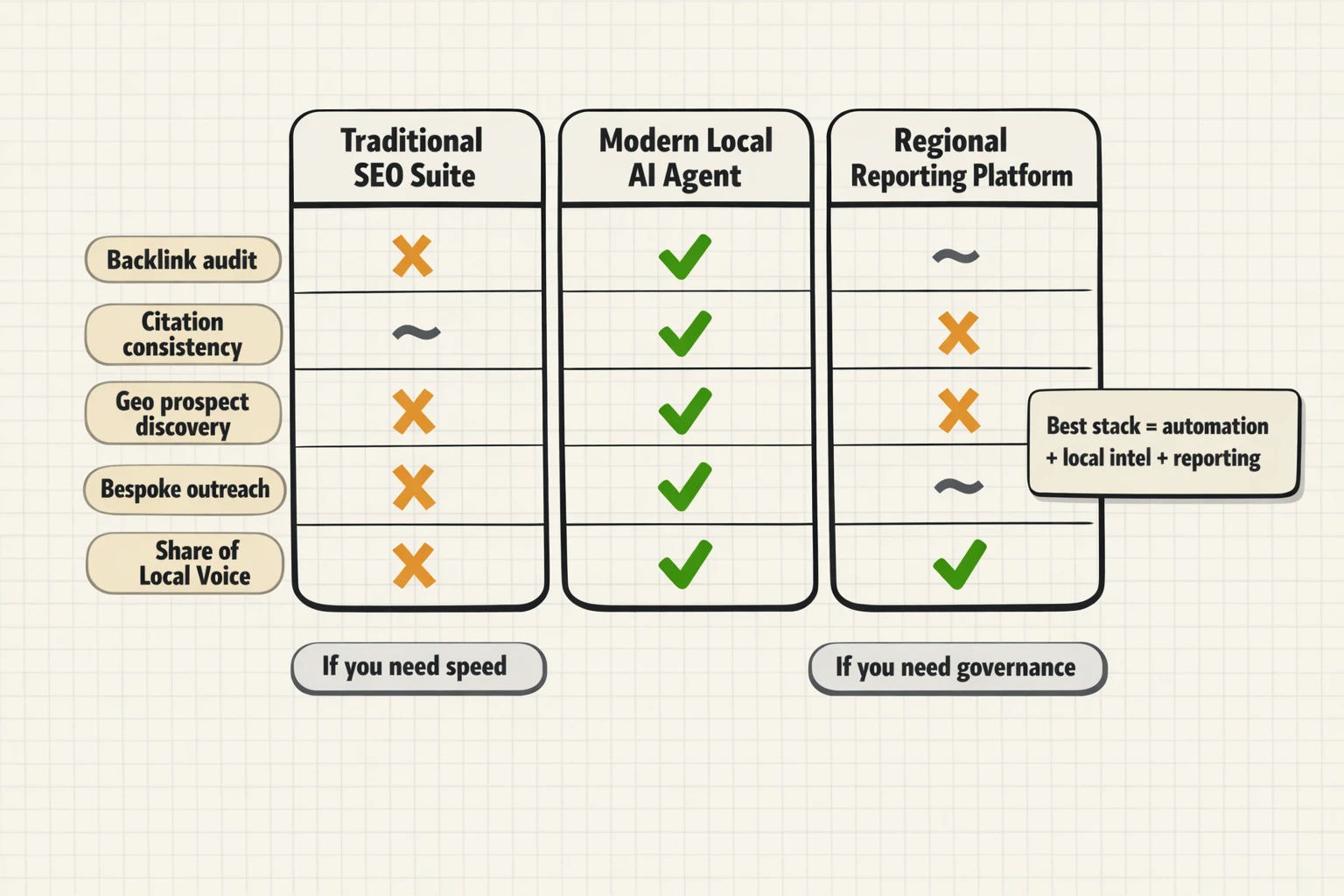
Traditional SEO software remains excellent for high-level backlink audits and technical site health. However, relying solely on these tools often leads to generic link-building strategies. They are excellent at showing you where competitors have been, but they lack the predictive capabilities to identify emerging hyperlocal unlinked mentions.
In contrast, a modern strategy blends highly localized tracking with AI automation. Tools like Nightwatch dominate local SEO reporting by providing localized rank tracking down to the zip-code level. When paired with specialized AI agents like Paige AI from Merchynt, the results are staggering. Internal benchmarks from Merchynt show that consistent, AI-driven Google Business Profile (GBP) automation and entity optimization can increase a local business’s "ranking radius" by up to 40% in just 6 months.
By utilizing AI to process regional link density gaps, you build a bespoke link profile that perfectly mirrors the geographic footprint algorithms expect to see from a true market leader.
Will using AI for link building outreach get my site penalized?
AI is a tool for analysis and personalization, not a license to generate spam. Penalties occur when AI is used to mass-generate low-quality content or automate blast emails without oversight. When AI is used to analyze a target publication and craft a highly relevant, bespoke pitch—followed by a strict, multi-point human quality assurance check—it enhances compliance with Google's quality guidelines rather than violating them.
How do I measure the ROI of regional source building compared to traditional link building?
Traditional link building is often measured purely by Domain Rating (DR) and link volume. Regional source building should be measured by Ranking Radius (how far outside your physical location you rank in the map pack), Citation Readiness (how frequently generative AI answers recommend your brand), and the direct increase in highly qualified local organic traffic.
How quickly can AI-driven entity mapping impact my local visibility?
While SEO is always a long-term play, integrating AI-driven local signal consistency can yield faster results than traditional link building. Businesses actively expanding their localized entity footprint typically see measurable expansion in their ranking radius within 3 to 6 months, as search engines rapidly process the new, high-trust regional associations.
The transition from outdated directory chasing to AI-driven source building is the defining local SEO advantage of 2026. The brands that win will be those that map their local entities, reverse-engineer AI citations, and execute high-quality, heavily vetted outreach strategies.
If you are ready to move past generic link-building packages and develop a bespoke, AI-powered strategy that cements your brand as the undisputed authority in your region, it's time to evaluate your current backlink profile. Stop building links, and start building the sources that the engines of tomorrow actually trust.