Contents
Demo Link
Imagine this scenario: You’ve just pulled a list of 500 potential websites for your latest outreach campaign. You sort them by Domain Authority (DA) or DR (Domain Rating) if your a user of ahrefs like we are. You draft a reasonably personalized email, hit send, and wait for the links to roll in.
A week later, your inbox is filled with crickets, auto-replies, and perhaps one or two polite declines.
If this sounds familiar, you aren't alone. As we navigate the digital landscape in 2026, the reliance on traditional metrics has created a massive blind spot for digital marketers. A high Domain Authority is like a high credit score—it tells you a site is reputable, but it tells you absolutely nothing about whether they actually want to partner with you or link to your content.
This is where the magic of AI-driven prospect segmentation comes in. Rather than just skimming the surface, artificial intelligence allows us to analyze the deep, nuanced behaviors that signal a website is not just authoritative, but highly receptive.
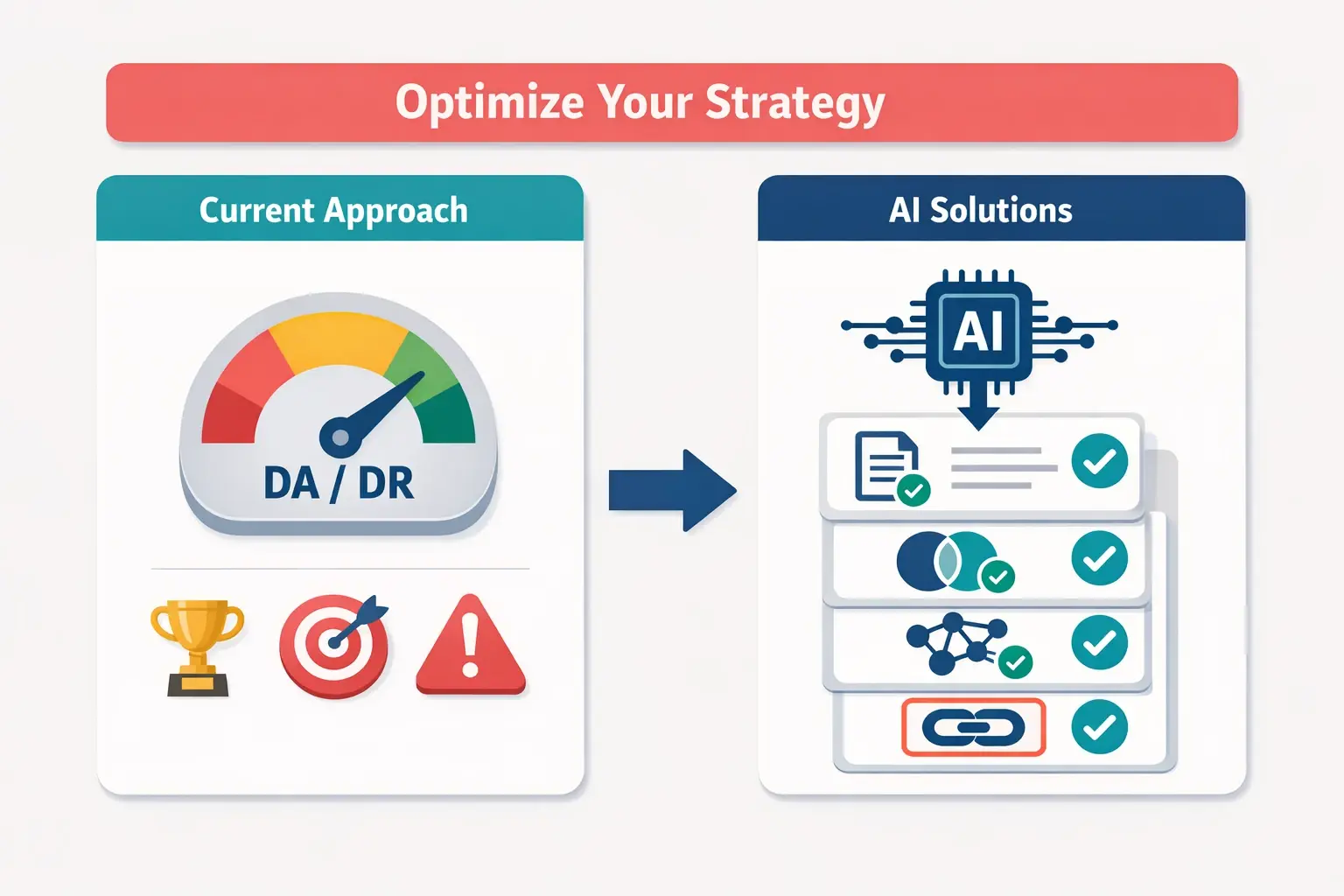
For years, the SEO industry operated on a simple heuristic: bigger metrics equal better links. But when you look closely at how is domain authority calculated, you quickly realize it is a logarithmic scale based purely on backlink profiles. It doesn't measure editorial calendars, audience intent, or whether the site's author actually links out to third-party resources.
By heavily weighting basic link metrics like DA or DR, marketers end up pitching massive publications that rarely link out, while ignoring highly engaged, mid-tier blogs that perfectly align with their content and are actively looking for resources.
AI-driven segmentation is the process of using machine learning (ML), natural language processing (NLP), and predictive analytics to categorize prospects based on their likelihood to link. Instead of relying on a single static number, AI models ingest thousands of data points to find hidden patterns.
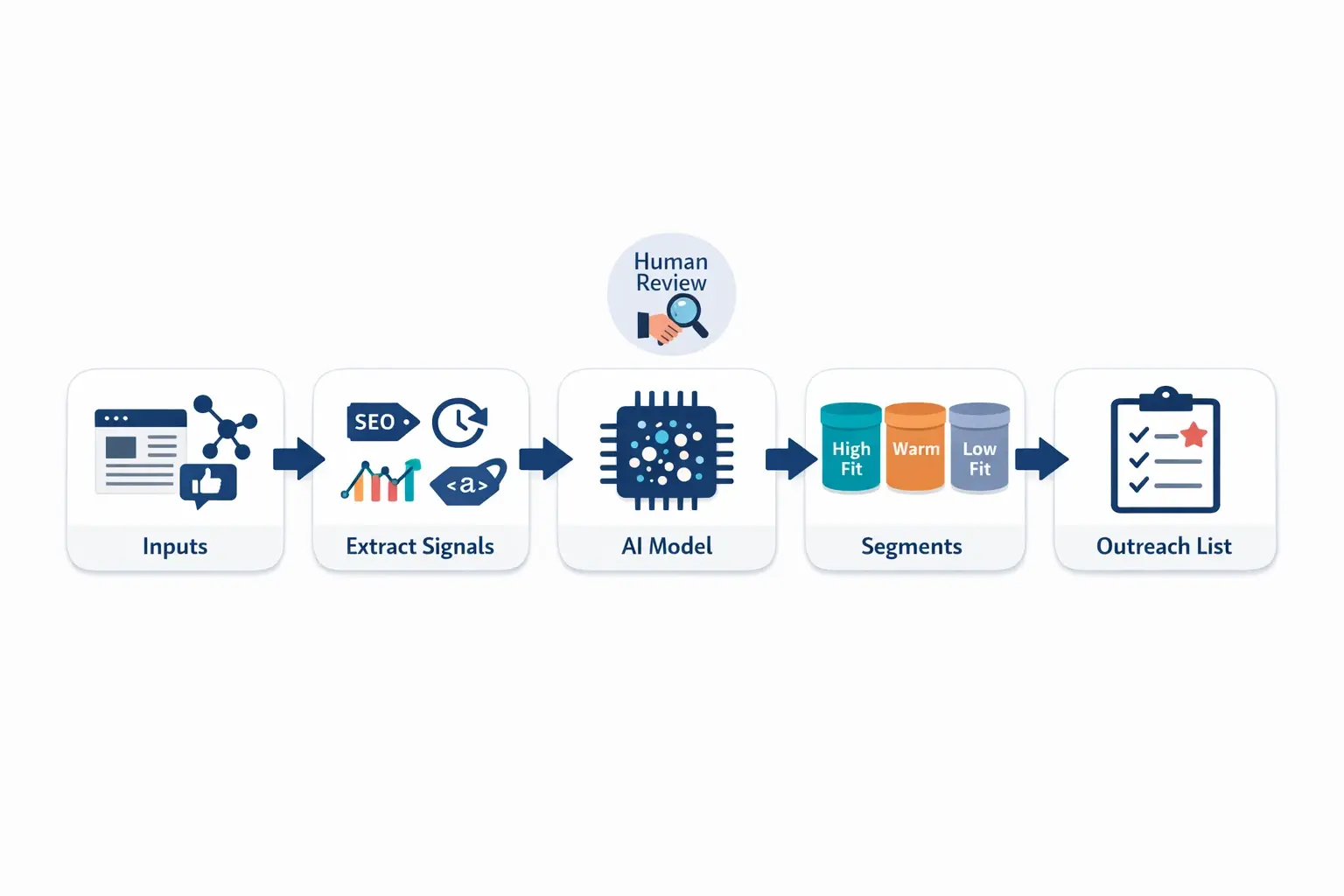
Rather than asking, "Is this site powerful?" AI asks, "Is this site a perfect fit for this specific piece of content, and do their historical actions suggest they will link to it?"
To truly understand how artificial intelligence shifts the paradigm, we have to look under the hood. AI doesn't just process data faster; it processes entirely different types of data to identify high-potential linkers.
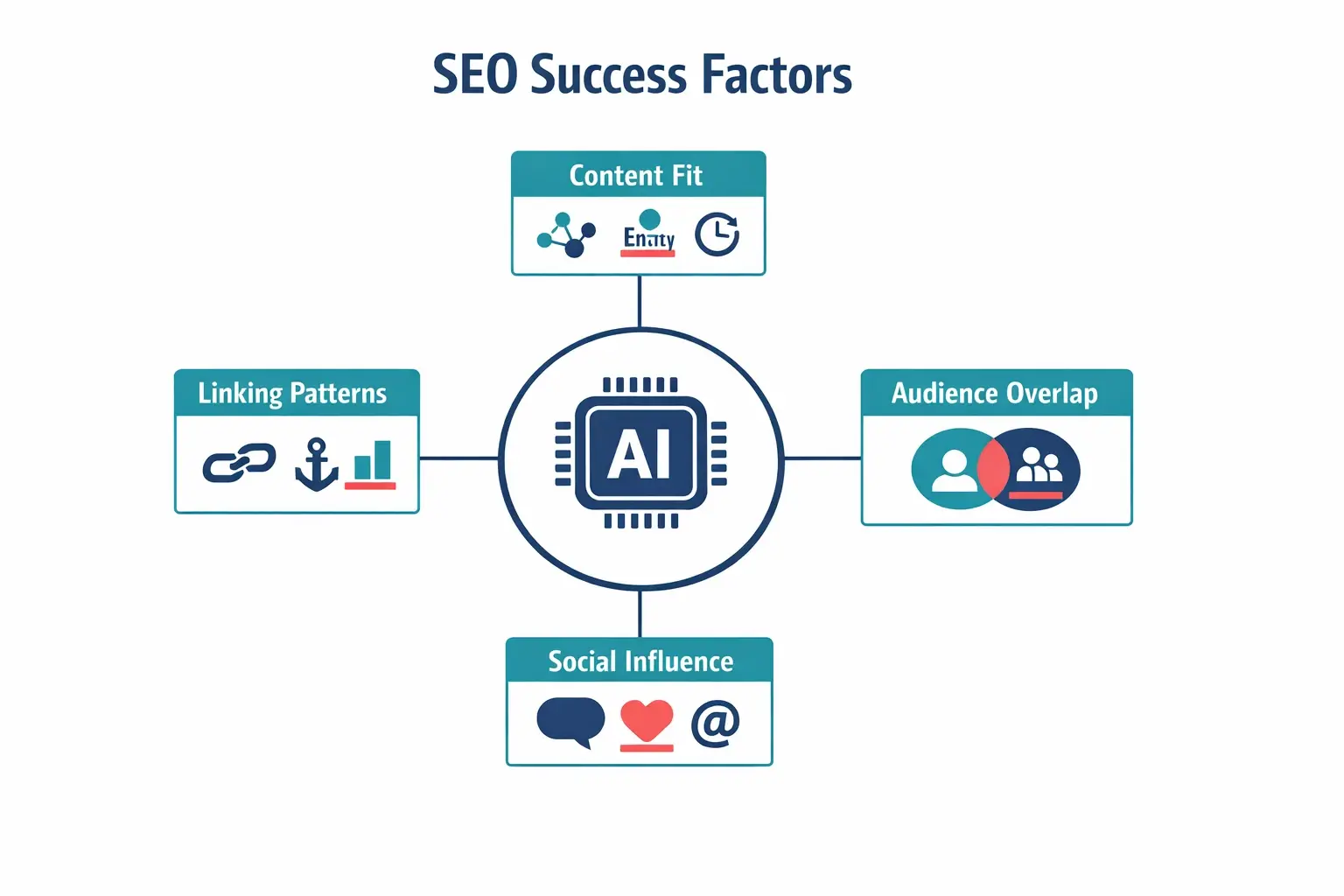
Historically, finding niche relevant backlinks meant matching target keywords. If you sold coffee beans, you looked for sites mentioning "coffee beans."
Today’s AI uses Natural Language Processing to understand semantic similarity and entity relationships. It can analyze a prospect’s entire content ecosystem to gauge their true topical authority. For example, AI knows that a blog discussing "water temperature," "extraction time," and "burr grinders" is highly relevant to a specialty coffee brand, even if the exact keyword "buy coffee beans" is never used. AI identifies the gap in their content that your article perfectly fills.
You don't just want a link; you want a link that drives engaged traffic. Traditional tools can't tell you if your audience and the prospect's audience are actually the same people.
AI models can analyze traffic sources, social sharing behaviors, and comment sentiment to detect shared readership. By clustering these behavioral signals, the AI can alert you to a mid-tier blog with a fiercely loyal audience that perfectly overlaps with your ideal customer profile—a target that traditional metrics would have completely overlooked.
We’ve all seen websites with massive social followings but zero actual engagement. Follower counts are vanity metrics that easily misdirect manual outreach efforts.
AI evaluates a prospect's real social influence by analyzing engagement rates in specific niche communities, assessing how often their content is amplified by other industry leaders, and examining historical share patterns. A site with 2,000 followers who actively debate and share their content is infinitely more valuable than a site with 50,000 passive followers.
This is perhaps the most powerful "aha" moment for modern SEOs. Just because a site publishes great content doesn't mean they link out to others.
Through advanced backlink gap analysis, AI maps a prospect’s outbound linking philosophy. It answers questions like:
Insights like those found in the Jasper Morris Profit Engine AI strategy frameworks show that targeting sites with a proven psychological propensity to link out increases outreach success rates exponentially.
While the technology is incredible, turning your link building over to a black-box AI model without oversight is a recipe for disaster.
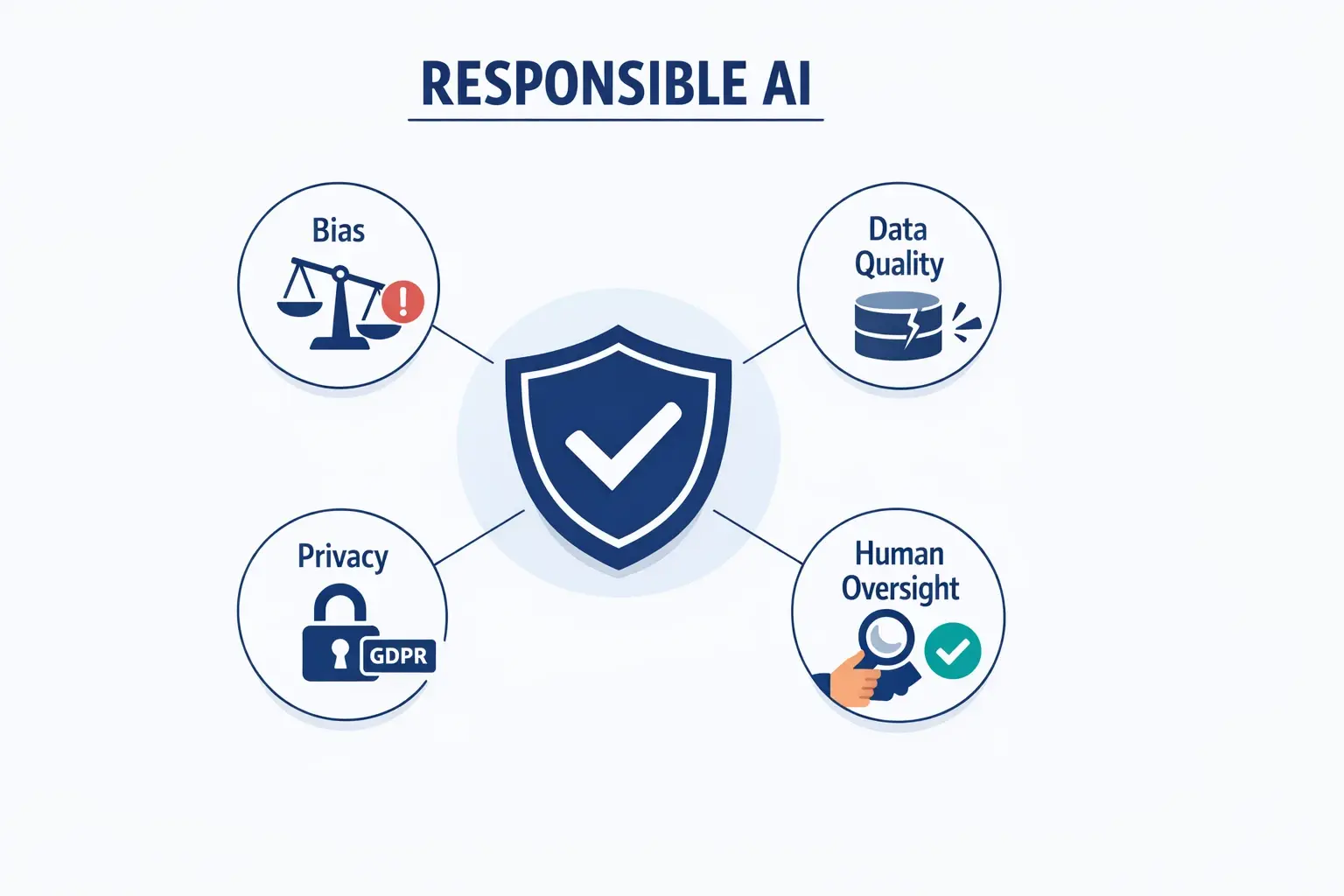
If you are exploring automated link building, you must remain aware of several key challenges:
The goal is to use AI for the heavy analytical lifting—the prospect segmentation—so that human marketers have the time and energy to forge genuine, value-driven relationships with the right people.
You don't need a degree in data science to start leveraging these concepts. The integration of these advanced algorithms into everyday software means the barrier to entry has never been lower.
If you are just dipping your toes in, you might experiment with various free link building tools to see basic semantic connections. As you scale, investing in specialized automated link building tools that offer AI-powered CRM capabilities will allow you to sort your prospects by intent and relevance, rather than just raw authority.
Start by asking a different set of questions during your next campaign. Instead of asking "How powerful is this site?", ask your data: "How deeply does this site care about my topic, and what is their history of citing external experts?"
It is the use of artificial intelligence and machine learning to analyze massive amounts of data (like content relevance, audience behaviors, and historical linking habits) to group potential link targets based on how likely they are to respond favorably to your outreach.
Domain Authority is a great starting point, but it's a vanity metric when used in isolation. It predicts how well a site might rank on search engines, but it doesn't indicate if the site’s editors actively link out to external content or if their audience overlaps with yours.
Absolutely not. AI is a tool for research and segmentation. It identifies the needle in the haystack in seconds. However, building the actual relationship, negotiating the value exchange, and crafting content that editors love still requires human empathy, creativity, and editorial judgment.
Using AI to segment your research is perfectly safe and highly recommended. However, using AI to automatically blast thousands of spammy, low-quality emails can harm your domain reputation and email deliverability. Ethical link building means using AI to research smarter, so you can reach out more authentically.
The shift from manual, metrics-obsessed link hunting to AI-driven, intent-focused segmentation is one of the most exciting evolutions in modern digital marketing. By understanding the deep signals of content relevance, audience overlap, social influence, and linking behaviour, you position yourself not as a beggar asking for a link, but as a valuable partner offering the perfect resource at the perfect time. All that being said, it's still a huge pain to implement contact us if you want to get the results with out the headacches.