Contents
Demo Link
Backlinks remain one of the most important factors in SEO, but not all links are created equal. Choosing the wrong provider can waste time, budget, and even harm your site’s authority.
That’s why you need to choose the best backlinks company, which doesn’t just give you links, but understands relevance, authority, and how search engines actually evaluate trust over time.
This guide walks you through what to look for in a backlink service, highlights reputable providers, explains pricing models, and shows how to measure success. Whether you’re an SEO agency or an in-house team, you’ll come away with a clear framework for building links that truly strengthen your site.
If you’re short on time, here’s a quick snapshot of the backlink companies covered in this guide. Each one approaches link building differently, so the right fit depends on your strategy, internal expertise, and risk tolerance.

Backlinks are an important part of your SEO strategy, but how they’re built matters the most. The wrong provider won’t just waste your budget. They can actively hold your site back or put it at risk.
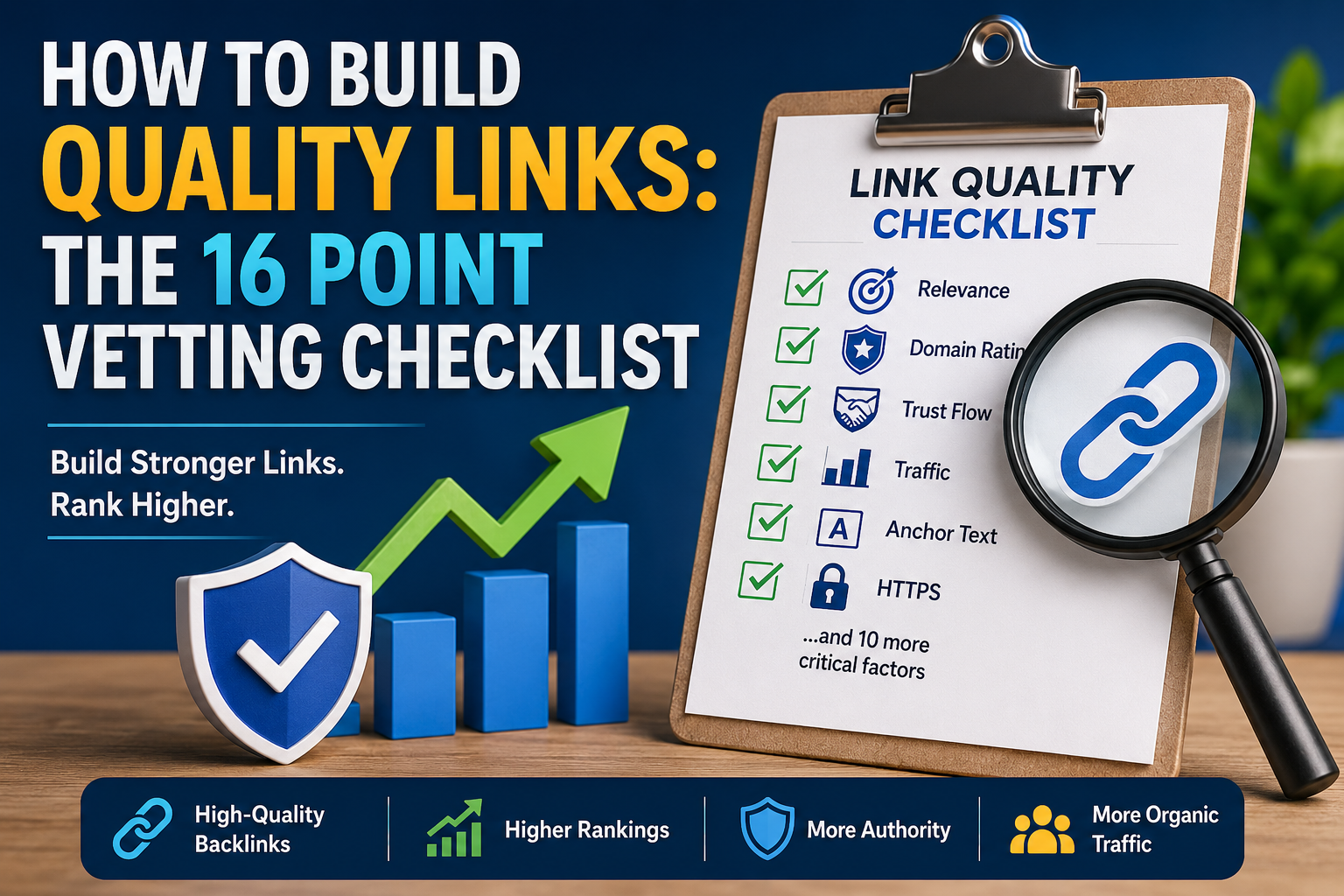
If you’re evaluating backlink companies, use this link building checklist to spot partners who focus on long-term gains:
The value of a link comes from context. A provider with detailed knowledge about your industry will understand which websites will add more value, which will make sense, and which links will move the rankings.
Service providers without niche familiarity, even high-authority links from them, can end up disconnected and weak.
Backlinks or any other SEO strategy will not give you results overnight. They build authority over time (generally 10 weeks) as search engines re-evaluate your site compared to your competitors.
Anyone telling you that they’ll quickly increase your rankings is either guessing or using unethical tactics, which you’ll have to pay for later. Real providers will explain accurate timelines and focus on long-term gains.
Link-building starts with research, and a provider skipping that isn’t trustworthy. The research process will consist of an audit of your existing backlinks, competitor analysis, and identification of real gaps.
From there, they set goals they can actually hit. Big promises usually mean low-quality volume. Measured targets usually mean strategy.
You shouldn’t have to trust blindly. A solid provider shares live URLs, anchor text, and domain metrics for every link.
Transparency isn’t a bonus. It’s how you know links are placed intentionally and earned the right way.
If a provider never pushes back on a questionable strategy, that’s a problem. An experienced team will tell you when an idea is risky, unnecessary, or unlikely to help.
That honesty protects your site and your budget, even if it’s not always what you want to hear.
You know your business; they know the link building strategy. The best results will only happen when your perspective aligns with the service provider’s.
That can be achieved with regular check-ins, feedback before placements go live, and adjustments as priorities change.
Links drop. Pages get removed. That’s part of SEO. What matters is how a provider handles it.
The right partner monitors link health and fixes issues, rather than making excuses or disappearing.
Any provider worth considering will audit your backlink profile before building anything new. You can’t improve authority without understanding what’s already helping or hurting you.
Skipping this step usually leads to random links and wasted effort.
Shortcuts sure exist, but they just don’t last. Private blog networks, link farms, and automated outreach might look efficient at first glance, but they introduce you to risks you don’t need.
For safe link building, you’ll need manual outreach, real sites, and editorial judgment.
Getting more links should never be the goal. But a stronger link profile is what you want. Getting stronger links means tracking referring domains, link relevance, anchor balance, and how authority builds over time.
If they measure success just by the number of links, you’re probably heading towards the wrong provider.

With many companies selling backlinks, there are far fewer that actually specialize in building them safely, strategically, and at scale.
These providers stand out because link building is either their core service or a clearly defined specialty:
My Profit Engine is built entirely around one thing: backlinks. We have a strategy-first approach; the manual link acquisition is designed to strengthen authority without introducing risk.
Our AI-powered Link Engine Strategy is the differentiating factor, which evaluates your existing link profile, competitors, and any authority gaps before a single link is placed.
From there on, the execution process focuses on vetted niche edits, guest posts, HARO links, and tiered link campaigns, all manually reviewed and tailored to the client’s goals. For agencies and in-house teams that want a dedicated link partner without distractions, this level of focus matters.
Get your link-building strategy. Book a call today.
Editorial Link secures you high-authority editorial placements, specializing in SaaS link building and white-label genres. The good thing about them is that they have direct relationships with site owners and publishers, which allows them to secure pre-approved placements and consistent link quality.
They’re suitable for teams that give special attention to editorial credibility and hands-off execution, especially when link placements need to closely align with brand positioning.
The editorial-first approach can limit flexibility for teams looking for broader link types or layered link strategies.
Stan Ventures brings together link-building experience with scale, while offering a customized outreach supported by AI-driven domain research. Their services emphasize white-hat practices, transparency, and pre-approval workflows, which appeal to agencies managing multiple clients.
They operate with a broader SEO background, but link building remains one of their most established offerings.
Because they operate as a broader SEO provider, link building may not receive the same exclusive focus as a link-only specialist.
LinksThatRank, founded by Matthew Woodward, focuses greatly on relevance and quality control. Each of their link goes through multiple checks for indexation, site health, and contextual fit before placement.
They’re a good choice for competitive niches where link quality matters more than speed, though they also offer content services alongside link acquisition.
Sometimes their quality-focused process can result in slower turnaround times than those of volume-based providers.
FATJOE is mostly used by agencies that want to deliver links quickly and at scale. Their platform supports guest posts, niche edits, and digital PR-style links with predictable turnaround times.
While the model leans more toward volume and efficiency, it works well for teams that already have strategy handled internally and need execution support.
The efficiency-first model assumes you already have a clear strategy in place, as strategic planning is largely left to the client.
Searcharoo is simply a data-driven link-building provider that offers custom outreach, niche edits, and guest posts with thorough reporting. Their structure works well for teams that want transparency and a clear audit path for every link.
They’re chosen by SEOs who want structure and consistency over aggressive scaling.
Teams seeking aggressive scaling or highly customized link strategies may find the approach more conservative.
UK Linkology focuses on quality-first link acquisition through carefully vetted sites. Every link is manually reviewed for safety and relevance, which has helped them build a reputation for long-term SEO stability.
They’re a good fit for businesses prioritizing risk management and clean link profiles over rapid expansion.
The strong focus on risk management can limit speed and volume for campaigns that require rapid growth.
Reachology operates closer to the digital PR end of link building, helping brands secure placements in well-known publications and media outlets. These links tend to support authority and brand trust more than raw link volume.
For companies where reputation and visibility matter as much as rankings, this approach can be effective.
Digital PR-style links may be less predictable in volume and consistency compared to structured link-building campaigns.
WhitePress is a marketplace rather than a managed service provider, connecting buyers with publishers who are offering sponsored content and link placements. It gives users control over pricing and site selection but requires more hands-on decision-making.
This will work for you if you have prior SEO experience and understand link evaluation, and want flexibility rather than strategy guidance.
Because it’s not a managed service, users are responsible for evaluating link quality and strategy themselves.

Link-building pricing usually falls into a few well-defined models. The difference isn’t just cost, it’s how links are sourced, how much strategy is involved, and who carries the SEO risk.
Each of these pricing models reflects who owns strategy, quality control, and risk. The more responsibility the provider takes on, the higher the cost and the lower the emphasis on raw link volume.
Once links go live, the work isn’t done. What really matters is knowing whether those links are strengthening your authority, relevance, and search visibility over time. The right link building metrics tell you what’s working, what isn’t, and whether your strategy is actually moving the needle.
Here’s how to measure link-building success without getting lost in vanity numbers:
Getting more links feels good, but where those links are coming from matters a great deal. A rise in unique referring domains, meaning more distinct sites linking to you, is a stronger signal to search engines than ten links from the same small group of domains.
It’s the breadth of real “votes” your site earns that builds credibility.
All backlinks aren’t equal. A link from a relevant site with real organic traffic is worth far more than one from a directory or thin blog. Evaluate your links based on:
Quality-focused metrics like these show if your links are positioned to genuinely boost SEO or just exist to inflate counts.
Make sure to have a natural mix of anchor texts, branded, generic, partial match, and long-tail, which will signal a healthy link profile.
Having too many exact-match keyword anchors can indicate that you’ve manipulated them to deceive search engines. On the other hand, a balanced distribution suggests organic, context-driven linking.
Measuring traffic from the sites linking to you tells you whether those links are actually driving real visitors, not just SEO value. Use Google Analytics or similar tools to track:
If referral traffic is increasing on relevant pages, your link-building efforts are delivering real audience value in addition to ranking signals.
Links should support improved keyword positions over time. Regularly check how your target keywords are performing in search results.
If you see meaningful upward movement after link acquisition, especially for priority terms, that’s a strong sign the campaign is working.
Not all links are positive. Tools like backlink audits can show you potentially toxic or spammy links that might drag down your profile.
Investigating and addressing these early protects your SEO investment.
Choosing a link-building partner isn’t about who sells the most links. It’s about finding a team that understands your goals, your niche, and how to build authority without introducing unnecessary risk.
Here’s what to look for when evaluating potential providers:

Not every link-building service is designed to help your site grow. Some are built to look good on a report, move fast, or hit a price point, often at the expense of relevance, safety, and long-term performance.
Knowing what to avoid is just as important as knowing what to buy:
PBNs are networks of sites created solely to manipulate rankings by linking to each other. While they can produce short-term gains, they’re easy for search engines to detect over time and often lead to penalties or devalued links.
If a provider won’t clearly explain where links are coming from or owns a large number of the sites themselves, that’s usually a red flag.
Link farms and low-quality directories exist solely to publish outbound links. They lack topical relevance, real audiences, and editorial oversight, which means the links they provide add little value and can weaken your overall link profile, especially at scale.
Automation has its place, but link acquisition still requires human judgment. Providers relying heavily on automated outreach often prioritize speed over relevance, leading to links being placed on weak or irrelevant sites.
When volume becomes the goal, quality is usually the trade-off.
Anchor text matters, but aggressive use of exact-match keywords is one of the fastest ways to raise red flags. A natural backlink profile includes branded, generic, and contextual anchors that reflect how people actually link.
If a provider pushes keyword-heavy anchors as a selling point, it’s worth reconsidering.
No one controls search engine rankings. Any provider guaranteeing specific positions or rapid improvements is either guessing or using tactics that don’t hold up long-term.
Sustainable link building compounds gradually as search engines reassess authority. Anything promising otherwise should be treated with caution.
One-size-fits-all link packages ignore your existing backlink profile, your competitors, and your actual goals. Without research and prioritization, even decent links can end up being ineffective.
If strategy isn’t part of the conversation before links are placed, that’s a problem.
You should always know:
If reporting is vague or URLs aren’t shared, there’s no way to evaluate quality or risk.

These are some of the most common questions teams ask when evaluating backlink strategies and service providers:
Yes. Backlinks play a role in local SEO by reinforcing authority and trust signals. Links from locally relevant websites, regional publications, business associations, and industry directories help search engines understand your geographic relevance.
While backlinks alone won’t guarantee local rankings, they strengthen the signals that support map visibility and local organic results.
DoFollow links pass authority from one site to another and directly influence rankings. NoFollow links signal search engines not to pass authority.
While they don’t impact rankings directly, NoFollow links still support a natural link profile, brand visibility, and referral traffic. Strong backlink profiles typically include a mix of both.
Backlinks themselves do not affect your site’s loading speed. Your hosting, code, images, and server performance influence speed.
However, links from low-quality or spam-heavy sites can indirectly impact crawl efficiency and overall site trust, which is why link quality still matters.
Low-risk backlinks usually come from real websites that follow editorial standards and are genuinely relevant to your topic. This includes contextual niche edits, branded guest posts, HARO or journalist mentions, industry resource pages, and partnerships with related organizations.
What matters most isn’t how many links you build, but that each one is manually vetted and placed where it actually makes sense.
All your social media links are generally NoFollow and don’t pass direct link equity, but they still do contribute in other ways. To tell a few, they support content distribution, brand awareness, and referral traffic.
But most importantly, they give your content social visibility, which increases the chances of organic link earning by putting your content in front of audiences who may later link to it from relevant sites.
Backlinks reflect your site’s credibility and relevance, and choosing the right partner is critical for building authority safely and effectively. Transparency, ethical practices, niche expertise, and measurable results should guide your decisions, while shortcuts such as PBNs, link farms, or generic packages should be avoided.
When your goal is long-term growth, strategy matters just as much as execution. That’s where a dedicated, link-focused partner can make all the difference.
My Profit Engine operates as a link-focused provider, using an AI-powered strategy layer alongside manually reviewed niche edits, guest posts, HARO placements, and tiered link campaigns to support steady authority growth.
For SEO agencies and in-house teams looking to strengthen authority without taking unnecessary risks, connect with our team to discuss a tailored link-building strategy.