

Contents
Demo Link
In 2026, between 80-90% of citations in AI Overviews come from sources with strong E-E-A-T signals. This shift redefines link building from a game of volume to a crucial strategy for building external reputation infrastructure. For businesses evaluating where to invest their marketing budget, the choice between low-cost, high-volume links and strategic, high-authority links has never been more critical.
Authority backlinks serve as third-party validation, directly influencing how Google and its AI systems perceive your brand’s Experience, Expertise, Authoritativeness, and Trustworthiness (E-E-A-T). They are no longer just about PageRank; they are about proving your brand deserves to be a trusted source in the age of AI-driven search.
Authority backlinks are links from high-trust, topically relevant domains that act as third-party validation for a brand's expertise and trustworthiness. Unlike volume-based strategies that prioritize quantity, acquiring high authority backlinks focuses on the quality and contextual relevance of the linking source. This approach reduces the risk of penalties from core algorithm updates and builds a durable foundation of trust with search engines.
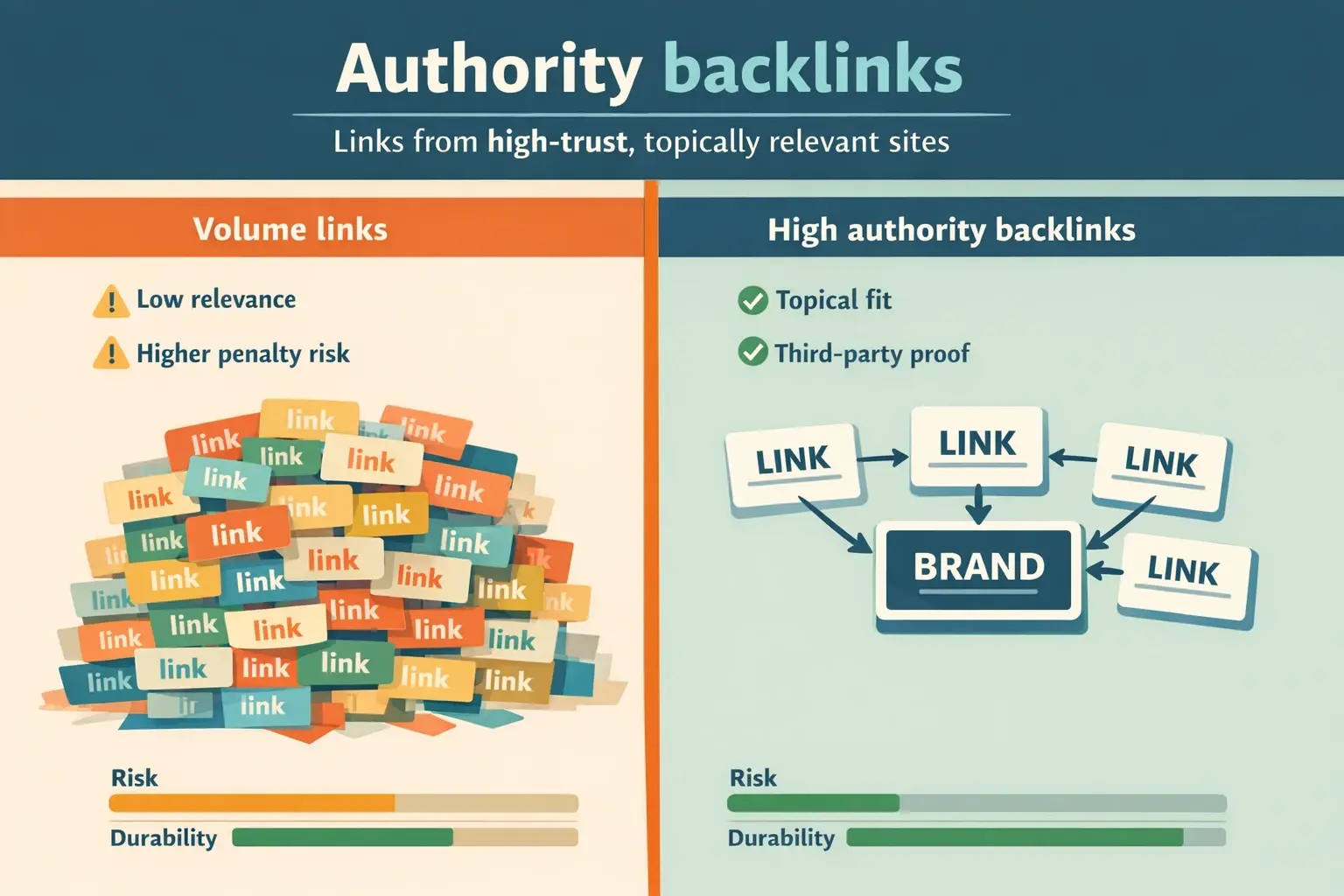
Authority backlinks emphasize topical fit and trust signals over link volume—lower risk, higher durability, and stronger third‑party validation for E‑E‑A‑T.
Google uses links as external validation to verify the claims a website makes about its own expertise and authority. According to Google's own Search Quality Rater Guidelines, human evaluators are instructed to conduct "reputation research" by looking for what independent, third-party sources say about a brand. High-quality links from respected sites in your industry are the most powerful form of this independent validation.
These E-E-A-T backlinks signal that other experts trust your content, effectively co-signing your brand's credibility. This is especially important for distinguishing real-world experience from synthesized content in an AI-heavy landscape. Research shows that vector embedding alignment and Knowledge Graph density, both heavily influenced by links, are now stronger ranking predictors than raw link volume.
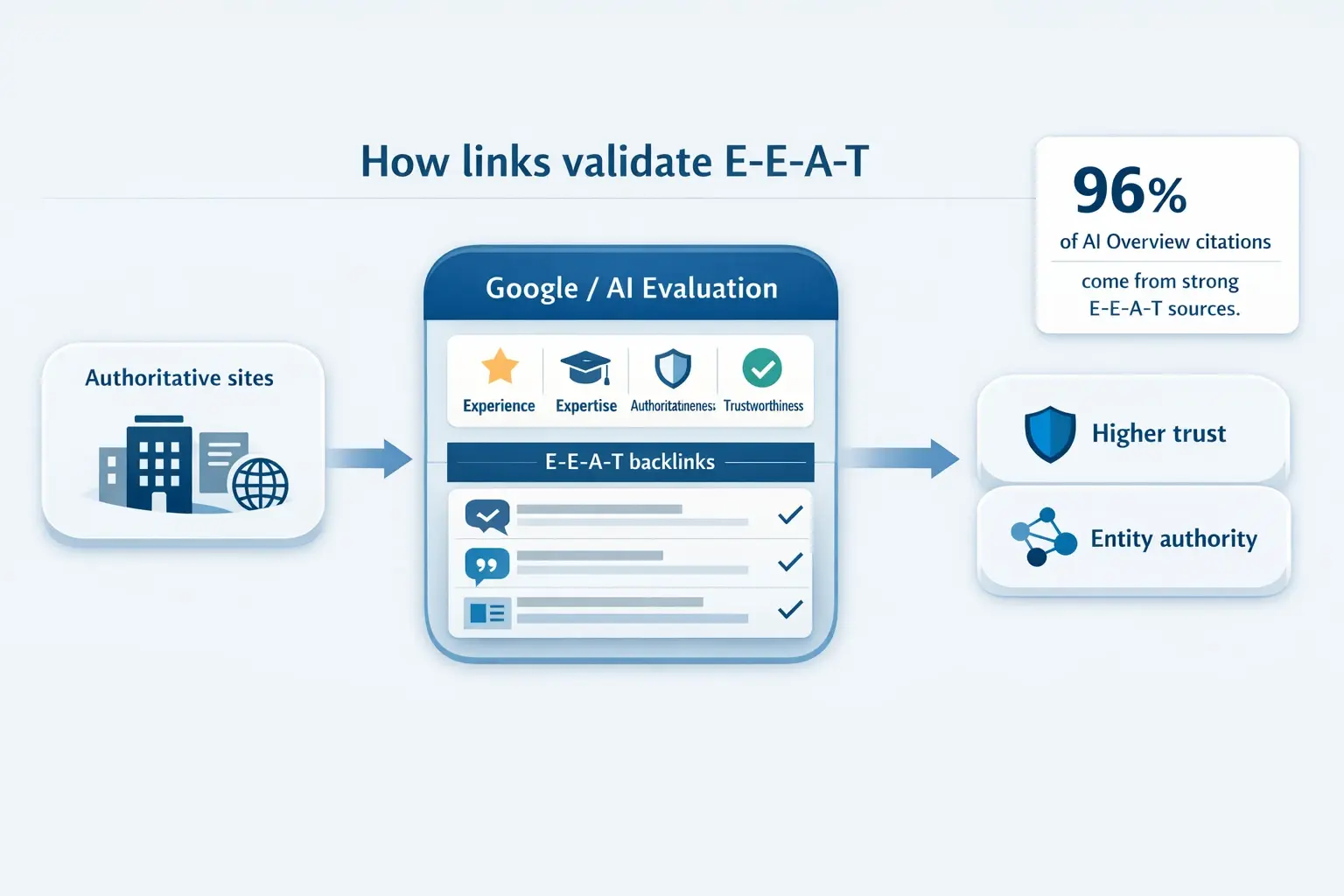
Links act as external reputation infrastructure: third-party sources inform “reputation research,” which strengthens E‑E‑A‑T signals and improves AI/Google trust outcomes.
Different link-building tactics provide varying levels of E-E-A-T validation, and understanding their respective strengths helps allocate resources effectively. Editorial links, often earned through digital PR, are the gold standard, while other methods like HARO offer unique advantages for demonstrating expertise.
Link TypeE-E-A-T Component SignalledTypical Authority LevelRiskEditorial LinksAuthoritativeness, TrustworthinessHigh to Very HighVery LowHARO Link BuildingExpertise, ExperienceHighLowNiche EditsAuthoritativeness, ExpertiseMedium to HighLow to MediumGuest PostsExpertiseMediumMediumTiered LinksAuthoritativeness (Indirect)VariesMedium to High
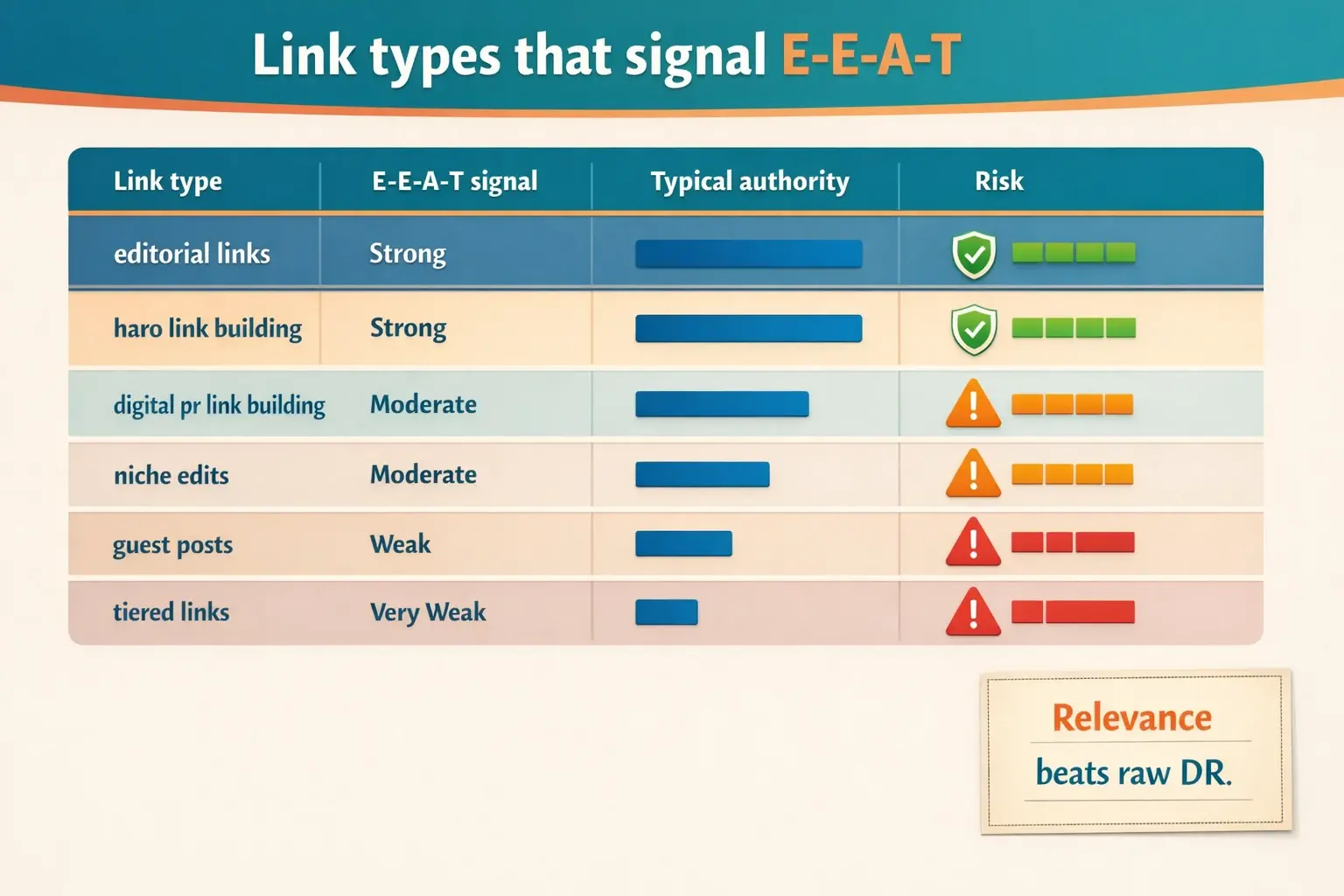
Use this matrix to compare link types by E‑E‑A‑T impact, typical authority, and risk—so budget goes to durable links instead of fragile tactics.
Tactics like HARO link building and broader digital PR link building campaigns are particularly effective because they generate editorially-vetted mentions from high-authority news and industry publications, sending powerful trust signals. Services that build tiered links can also amplify the authority passed from your strongest backlinks, though they require careful execution.
Backlinks build entity authority by helping Google connect your brand name to a specific, trusted concept in its Knowledge Graph. In the context of entity SEO, a link is more than a pointer from one URL to another; it's a relationship between two entities. When an authoritative entity (like an established industry publication) links to your brand, it tells Google that your entity is relevant and trustworthy within that topic.
This process is reinforced by both linked and unlinked brand mentions. While a direct link is a strong signal, consistent unlinked brand mentions across the web also help Google resolve your brand's identity and associate it with its area of expertise. This is why consistent NAP (Name, Address, Phone) information and anchor text are vital. Ultimately, a strong link profile helps solidify your brand's place in the Knowledge Graph, making it an unambiguous, authoritative source for search engines and AI agents.
Auditing your link profile for E-E-A-T requires shifting focus from simple metrics like Domain Authority to a deeper analysis of relevance and trust. This is where a systematic approach, like Profit Engine's proprietary 18-point quality assurance checklist, provides a decisive advantage. The goal is to identify and disavow toxic links while finding opportunities to build links that strengthen your external reputation.
Here is a simplified framework for your audit:
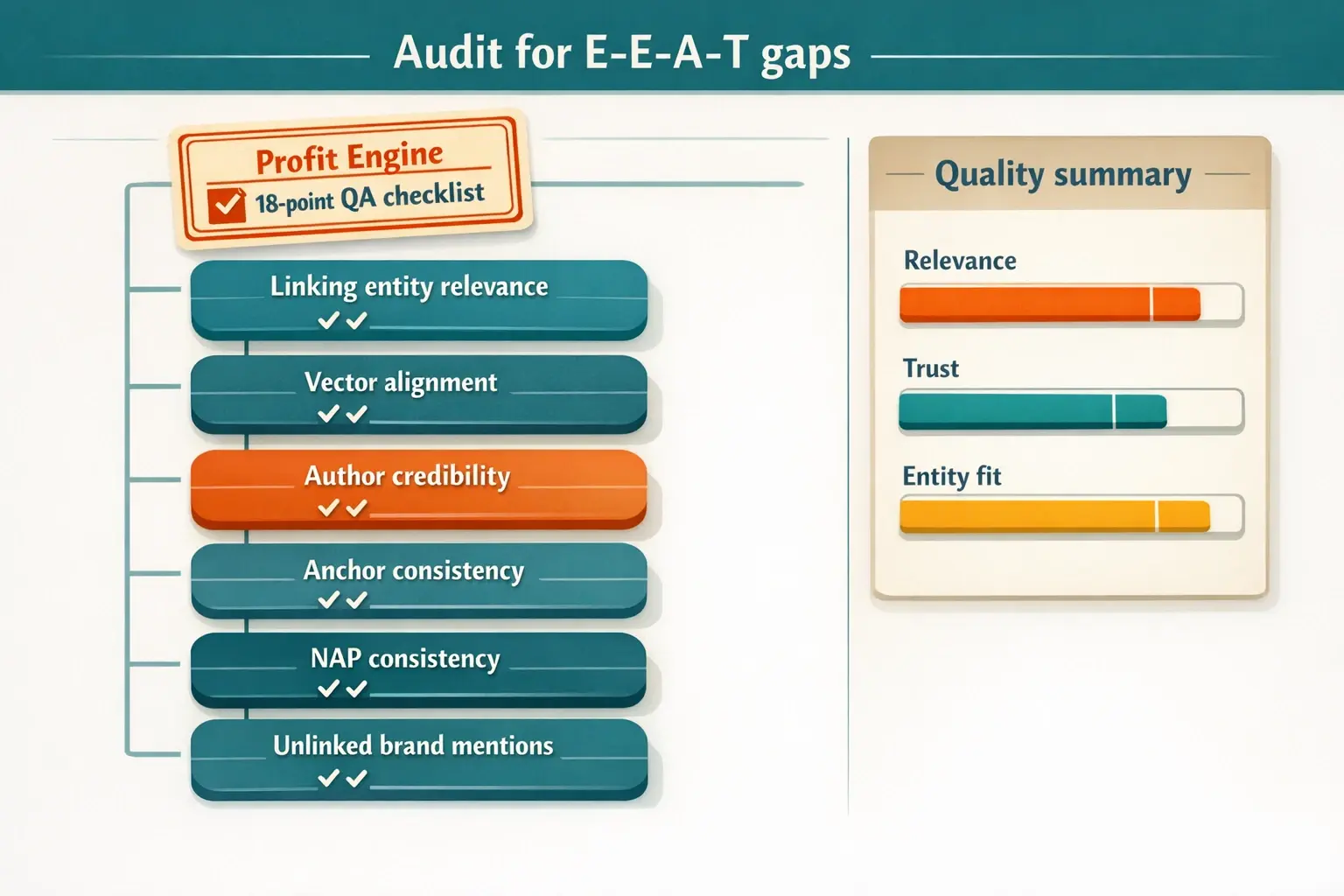
A relevance-first audit reveals E‑E‑A‑T gaps faster than DR checks—especially when link sources, surrounding context, and entity consistency are scored systematically.
The future of search visibility depends on building a link profile that serves as undeniable proof of your brand's credibility. By focusing on quality over quantity and aligning your strategy with how modern search engines evaluate trust, you build a competitive advantage that lasts.
If you're ready to move beyond outdated metrics and build a backlink strategy designed for the new landscape of search, explore our AI Link Strategy assessments. We analyze your profile through the lens of E-E-A-T and entity authority to build a roadmap for durable growth.