

Contents
Demo Link
Picture this: after weeks of targeted research, tailored outreach, and thoughtful follow-ups, a top-tier publication finally says “yes.” Your link goes live. You log the win, celebrate, and move on to the next opportunity.
If this sounds familiar, you aren’t alone. But in 2026, stopping at the "yes" means you are walking away from the most valuable asset you’ve just created: a warm relationship.
The initial link is merely the handshake. The real ROI lies in what happens next. Historically, nurturing these connections manually was too time consuming for most teams. But today, leveraging AI for post-link acquisition allows us to continuously monitor influencer activity, track content updates, and identify new collaborative opportunities, all without losing the vital human touch.
Let's explore how to shift from purely transactional link hunting to AI-Powered Link Partner Ecosystem Management.
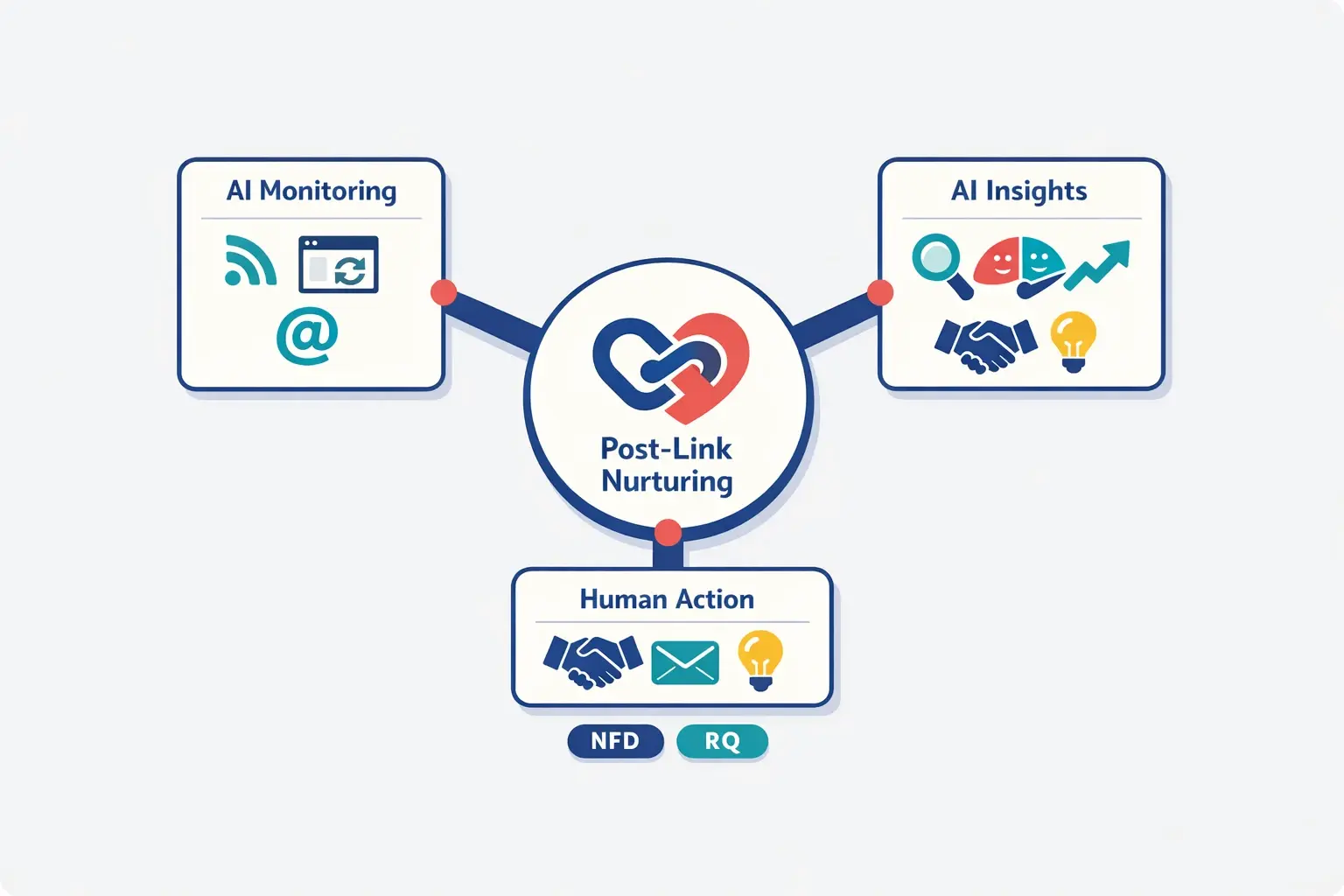
In an era where search engines heavily prioritize E-E-A-T (Experience, Expertise, Authoritativeness, and Trustworthiness) and AI Overviews summarize the web, establishing a trusted network of recurring partners is far more effective than constantly chasing cold prospects.
This brings us to a crucial concept: Nurture-First Development (NFD). NFD is the practice of prioritizing the enrichment of existing partnerships over the constant acquisition of new ones. It relies heavily on Relational Intelligence (RQ)—our human capacity to understand context, show empathy, and offer genuine mutual value.
When you wrap up your initial link building outreach, AI steps in to act as your ultimate relationship assistant. It absorbs context-rich insights from your partners' digital footprints, allowing your human relational intelligence to shine exactly when it matters most.
Many teams mistakenly believe that automated link building simply means using software to spam hundreds of inboxes. In reality, the most sophisticated use of AI happens after the link is built.
By setting up proactive AI monitoring, you transform your strategy from reactive to predictive.
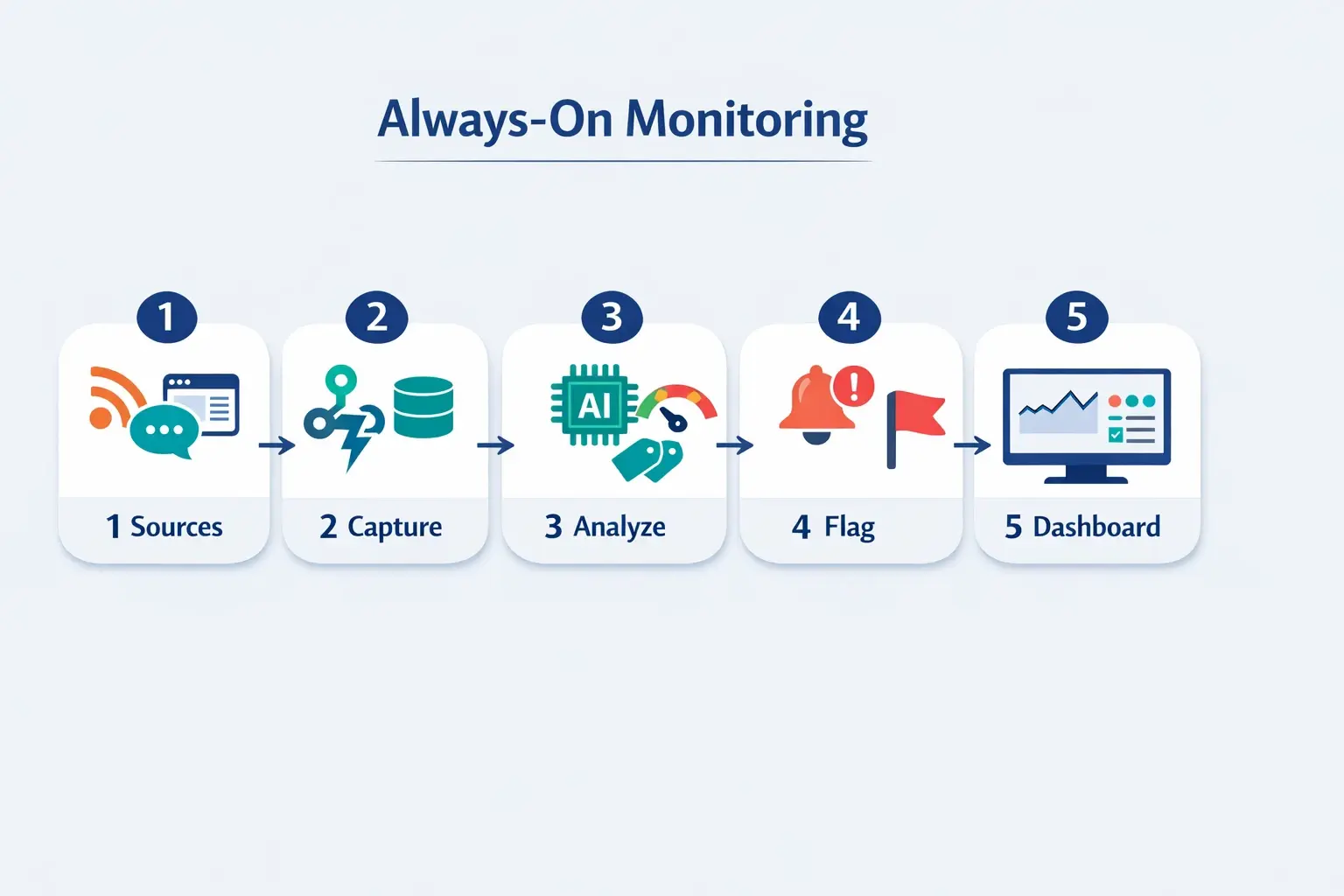
You no longer need to manually check an influencer's blog every week. AI-powered content change detection tools can track your partner’s publishing habits. When they publish a new core pillar page or update an old guide, your AI dashboard flags it.
This allows you to reach out organically: "Hey Sarah, noticed you just updated your guide on B2B SaaS trends. Loved the new section on remote team scaling!" This isn't pitching; it's being a supportive member of their audience. (Pro tip: keeping an eye on these pages alongside your favorite backlink checkers ensures your original links stay healthy while you discover new ones).
AI social listening goes beyond tracking your own brand. By monitoring your link partners, AI sentiment analysis can detect subtle shifts in their audience's interests or highlight when they are launching a new product.
Furthermore, AI can monitor their social feeds for unlinked brand shoutouts. Understanding the context of brand mentions for seo allows you to capitalize on organic goodwill. If a partner casually mentions your research on LinkedIn, AI flags it so you can jump into the comments, thank them, and subtly introduce a relevant new resource.
Monitoring is only useful if it leads to meaningful action. This is where AI transitions from a listening tool to a strategic advisor, helping you uncover the "Next-Best-Action" for your relationships.
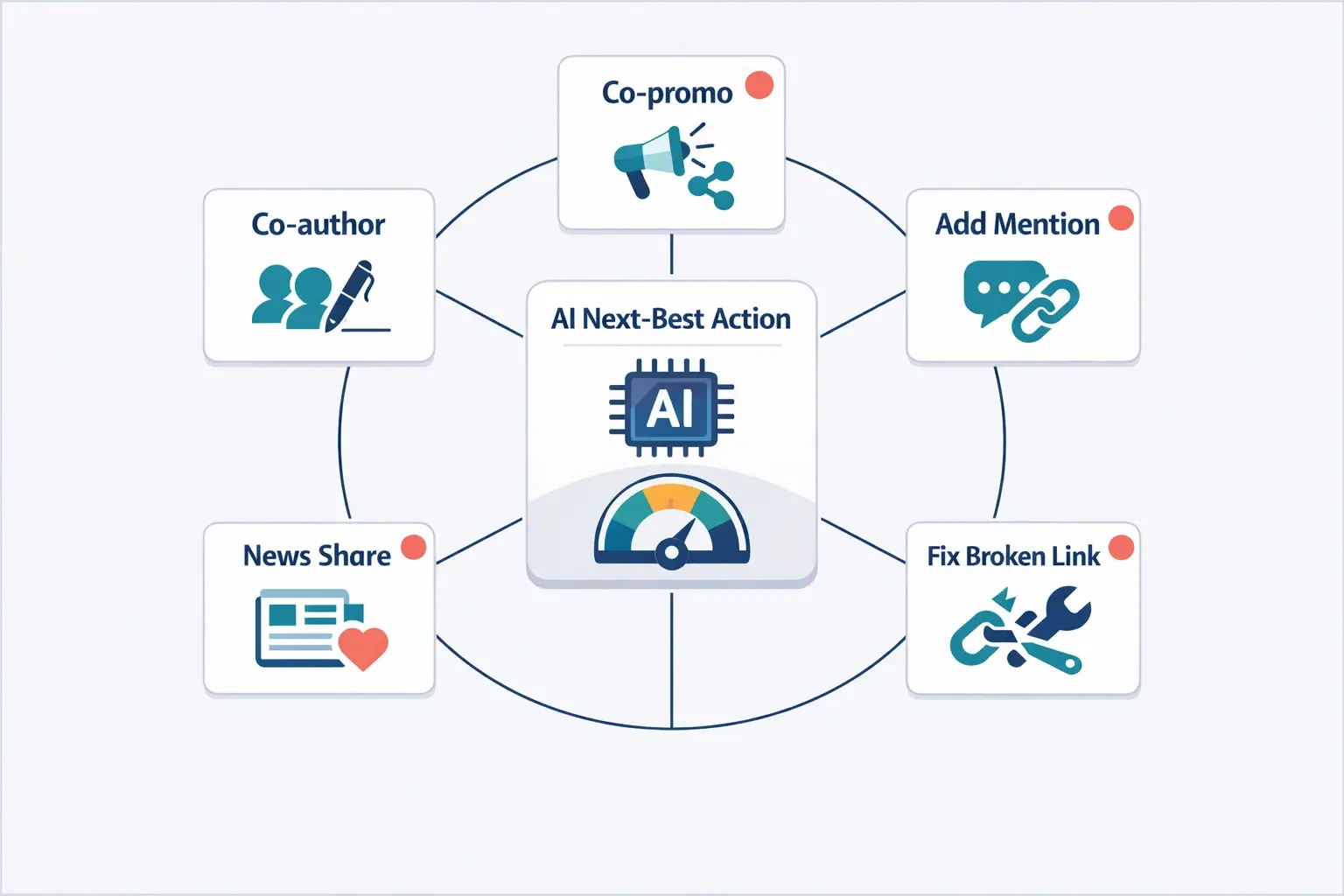
Because AI is continuously analyzing your partner's new content, it can automatically cross-reference their published topics against your own content library.
If your partner starts writing heavily about "Customer Retention" and you recently published an original data study on that exact topic, AI highlights this as a prime co-citation opportunity. You can confidently reach out offering them exclusive data to enrich their upcoming articles.
When you string these insights together, you start building a comprehensive digital pr strategy centered around a tight-knit ecosystem. Instead of asking for another link, you are proposing mutually beneficial collaborations based on real-time data:
By consistently offering value, the subsequent backlinks happen naturally as a byproduct of the relationship.
A common misconception is that heavily utilizing AI in relationship management strips away authenticity. The truth is, AI only damages relationships if you use it to fake human connection rather than augment it.
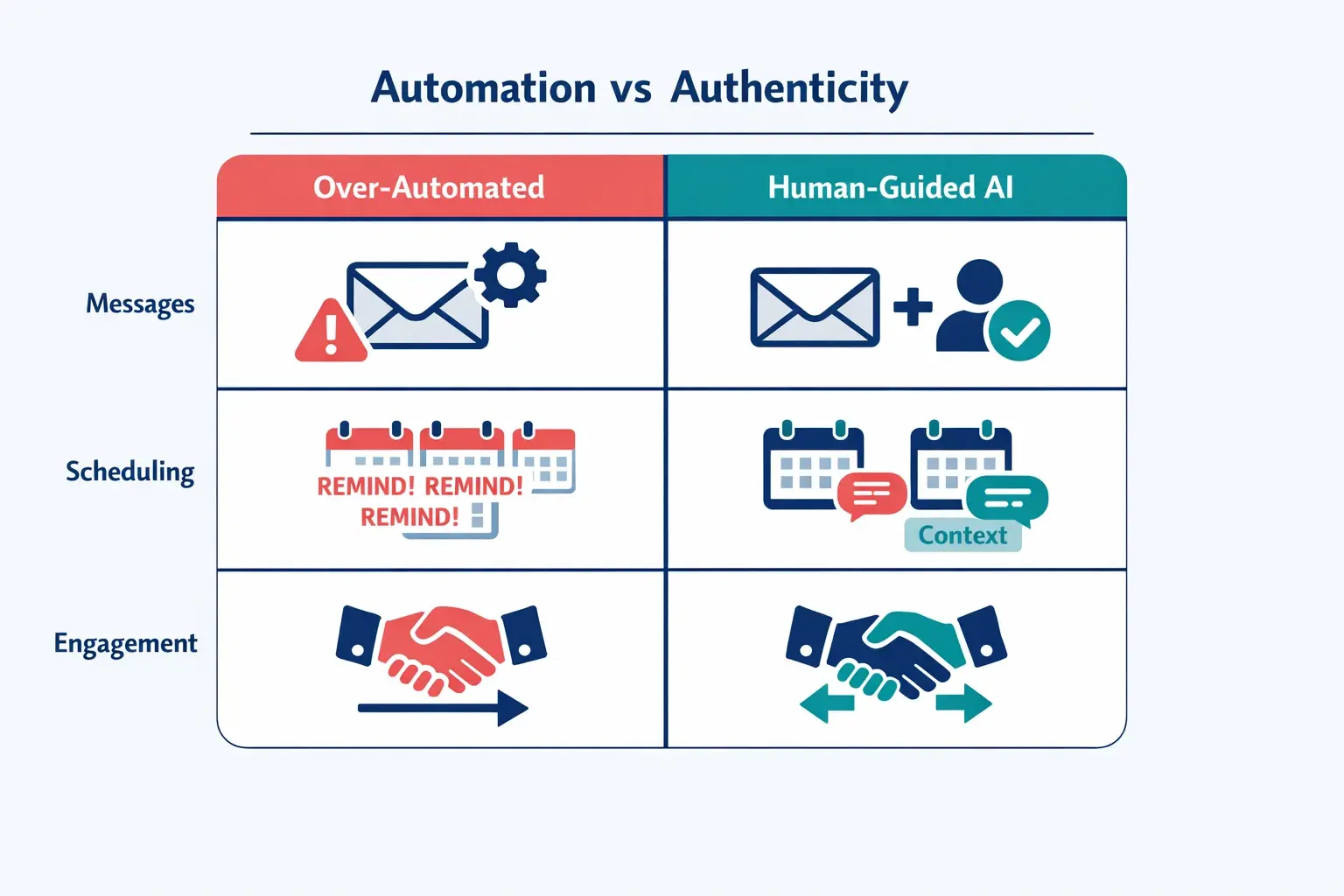
To maintain credibility, abide by these ethical guardrails:
It is the process of using artificial intelligence tools to continuously monitor, analyze, and manage ongoing relationships with website owners, journalists, and influencers after you have successfully secured an initial backlink from them. It focuses on finding future collaborative opportunities rather than treating the first link as a one-off transaction.
Yes. Modern SEO and AI tools can crawl partner websites on a set schedule, compare historical snapshots of the page, and alert you when content is added, updated, or when your specific link's status changes.
The biggest problem arises when marketers use AI to simulate human connection (like fully automated, generic follow-up emails) rather than using it for data analysis. Over-reliance on automation can lead to tone-deaf communications, loss of authenticity, and ultimately damaged professional relationships.
Absolutely. While the interface of search has changed in 2026, the underlying mechanisms that tell AI which information to trust remain rooted in authority signals. High-quality, contextually relevant backlinks from trusted relationships remain one of the strongest indicators of E-E-A-T.
Building a sustainable SEO foundation in 2026 requires looking beyond the immediate transaction. The most successful brands view their link profile not as a list of conquered URLs, but as a living, breathing ecosystem of industry peers.
By implementing an AI-driven monitoring workflow, you free up your mental bandwidth. You no longer have to guess what your link partners care about today—your dashboard tells you. And armed with that knowledge, you can begin reaching out not as a marketer asking for a favor, but as a trusted colleague offering a solution.
Take a moment today to list the top 10 websites that linked to you in the past six months. Instead of hunting for 10 new prospects tomorrow, explore how you might use these concepts to rekindle the connections you've already worked so hard to build.