

Contents
Demo Link
Imagine spending a significant portion of your marketing budget securing a backlink on a reputable, high-traffic blog. To the human eye, the link looks perfect. The anchor text reads naturally, the sentence flows smoothly, and the domain seems authoritative. You celebrate the win.
But a few weeks later, instead of a ranking boost, your traffic takes a subtle dip. What went wrong?
Here in 2026, the answer often lies in an invisible layer of the internet: Artificial Intelligence. While human SEO managers are looking at surface-level metrics, advanced AI algorithms deployed by search engines are analyzing hidden "digital fingerprints" that reveal whether a link placement is a genuine recommendation or a manipulated insertion.
As we navigate this highly sophisticated digital landscape, understanding how AI detects manipulative link schemes isn't just for tech developers—it's essential knowledge for anyone looking to build a resilient, future-proof online presence.
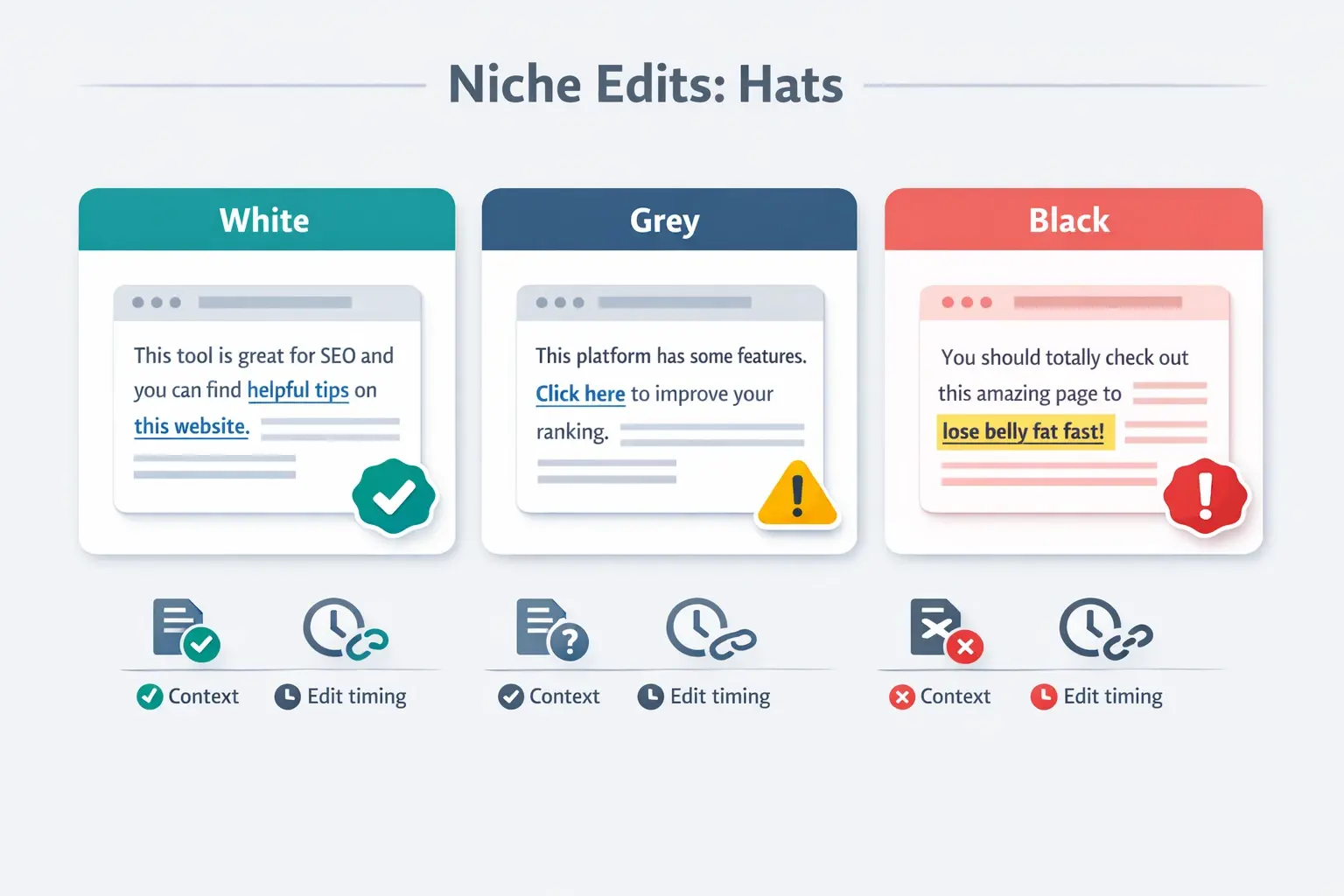
Before we dive into the mind of an AI, let's establish our groundwork. In the SEO world, niche edits—also known as contextual link insertions—involve adding a link to an existing, aged article rather than writing a brand-new post.
When people weigh guest posting vs niche edits, the appeal of the latter is obvious: you get to leverage the existing authority and traffic of a page that search engines already trust.
However, niche edits exist on a spectrum of ethics:
For years, the quality control for these contextual backlinks relied purely on human review. SEOs would check domain metrics, ensure the site had traffic, and verify the link didn't look completely out of place. But traditional manual detection is no longer enough.
If you've ever wondered does ai content rank in google, you already know that search engines have fundamentally altered how they process information. They aren't just reading words anymore; they are understanding intent, context, and historical patterns at a scale no human team could match.
A human reviewer might look at an article about "business software," see a newly added link pointing to your accounting tool, and think it looks perfectly fine.
But an AI looks deeper. It asks: Why was a three-year-old article suddenly updated just to add one specific link? Does the new sentence match the linguistic style of the original author? Does this domain have a history of suddenly linking out to unrelated financial sites?
To an AI, a poorly executed niche edit sticks out like a neon sign in a dark room.
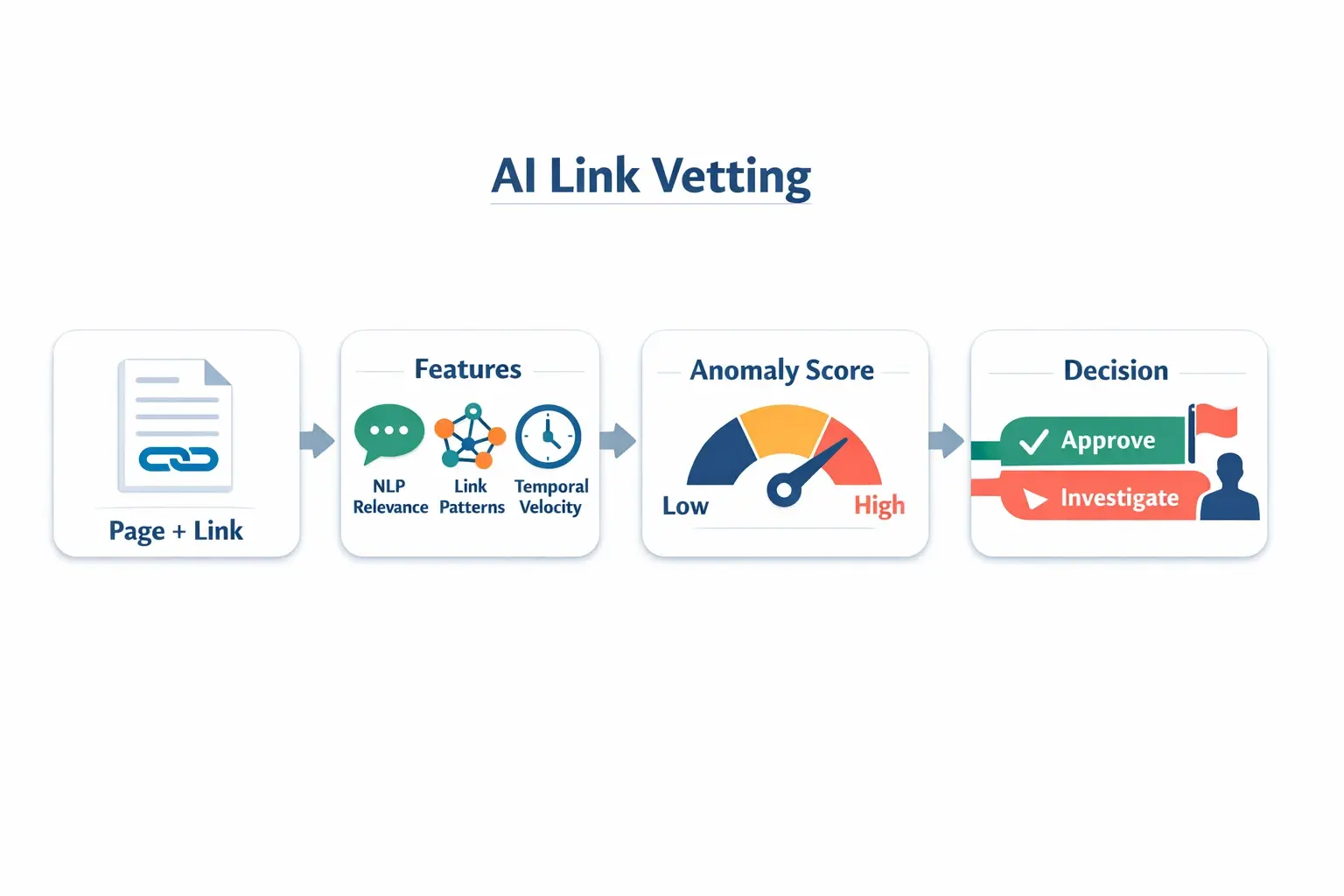
AI doesn't "read" an article the way we do. It uses highly specialized machine learning pipelines to evaluate authenticity. Two of the main technologies driving this are:
When manipulative link builders try to cheat the system, they inevitably leave behind digital fingerprints. AI models are trained on massive datasets of natural versus unnatural web behavior, teaching them to spot clusters of these small anomalies.
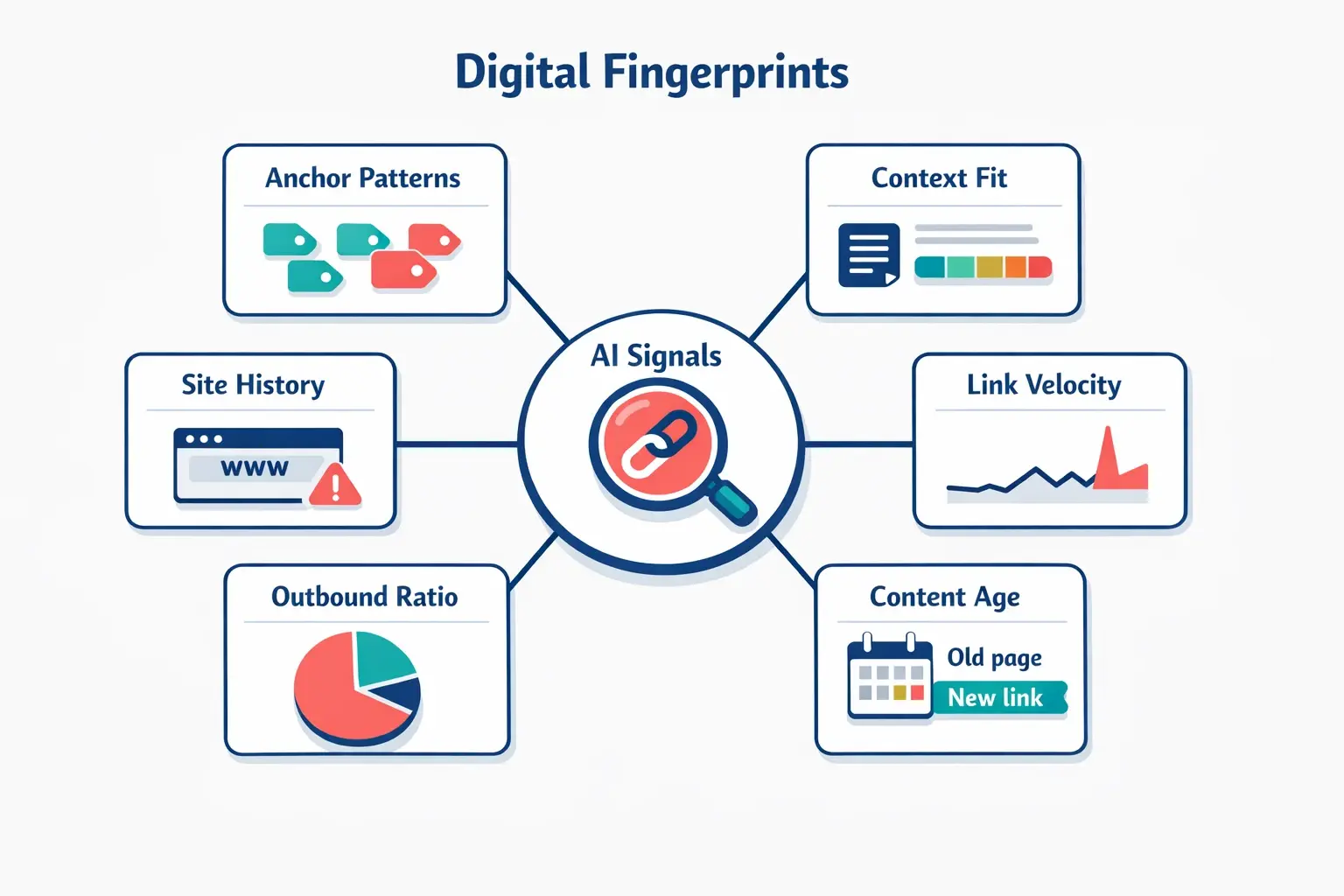
Here is exactly what sets off the AI alarm bells:
This is why looking solely at traditional link metrics—like Domain Rating (DR) or basic traffic numbers—is a dangerous game. A site might have great metrics on paper, but if its outbound links carry these digital fingerprints, search engine AI will neutralize the SEO value of your placement.
While AI is incredibly powerful, it is not infallible. Understanding its limitations is crucial for anyone engaging in outreach or content marketing.
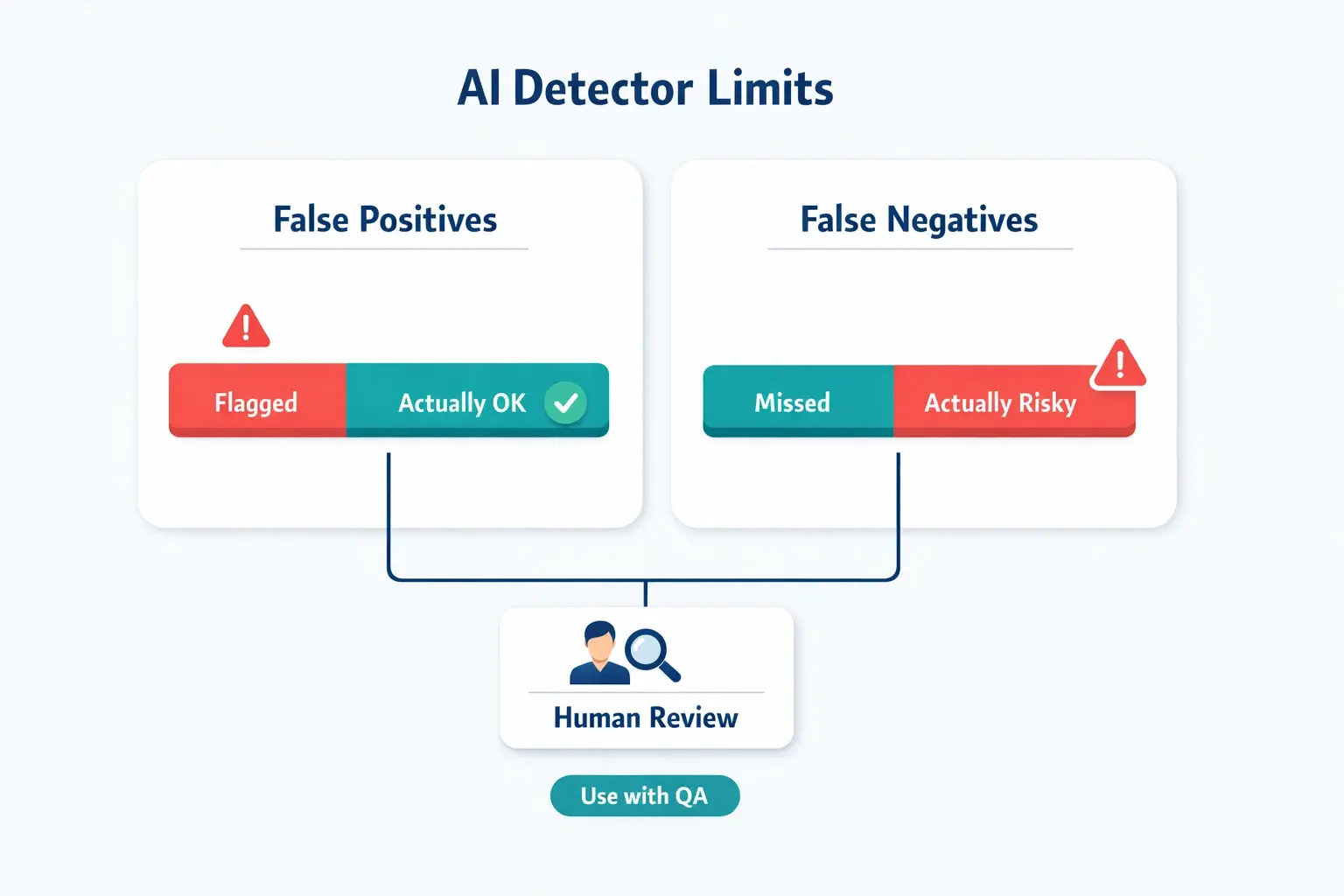
Sometimes, AI algorithms generate false positives (flagging a perfectly legitimate, helpful link as spam because it used slightly awkward phrasing) or false negatives (missing an incredibly sophisticated, AI-generated manipulative edit).
This is where the human element becomes your strongest safeguard. The agencies providing the best niche edits don't rely solely on automated tools. They use a hybrid approach: leveraging AI to scan for deep, structural anomalies, and then applying a rigorous, human-led multi-point quality assurance checklist to verify editorial integrity.
Relying on software alone is risky. You might occasionally need a reliable toxic backlink checker to audit your profile, but the goal should always be proactive prevention rather than reactive cleanup.
To succeed in 2026, you need to adopt an "AI mindset." You aren't just trying to convince a webmaster to link to you; you are proving to a machine learning algorithm that your link belongs there.
If a company thinks its website is being punished for engaging in black-hat seo tactics, the first step to recovery is shifting their perspective from manipulation to genuine value creation.
Here’s how you can think like an AI when evaluating a potential link opportunity:
Understanding how to manage your backlinks ethically requires recognizing that AI is not your enemy—it is a tool designed to reward authenticity.
Are niche edits safe in 2026?Yes, but only if they are executed ethically (white-hat). A niche edit is safe when it genuinely adds value to an existing article and is placed with full editorial oversight from the site owner. Manipulative, paid-for placements that lack context are highly unsafe due to advanced AI detection.
Can AI tools help me find good niche edits?Absolutely. While search engines use AI to detect spam, ethical SEO professionals use AI-driven tools to analyze backlink profiles, evaluate contextual relevance, and identify highly authoritative, safe opportunities that align perfectly with their brand.
How do I know if a backlink is "toxic"?Toxic backlinks usually come from sites with massive, sudden drops in traffic, a high volume of outbound links to spammy industries, or irrelevant content. If a link has no logical reason to exist on a page, an AI will likely flag it as toxic.
What is the "AI Visibility Gap"?The AI visibility gap refers to the concept that simply having a backlink isn't always enough to build brand authority with AI-powered search engines. Modern search engines also look for co-citations, brand mentions, and real-world PR to validate the authenticity of your link profile.
The era of tricking search engines with mass-produced, irrelevant link insertions is over. AI algorithms are continually learning, growing more sophisticated at identifying the digital fingerprints left behind by manipulative tactics.
But this shouldn't be a cause for alarm. Instead, it's an incredible opportunity. By understanding how AI differentiates between spam and quality, you can align your marketing efforts with what search engines actually want to reward: genuine, contextually relevant, and user-focused resources.
The next time you review your SEO strategy, ask yourself: Are my links hiding from AI, or are they proud to be seen? By committing to rigorous quality standards and ethical link-building practices, you ensure that your site's authority grows steadily, safely, and sustainably for years to come.